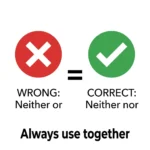
Emerge vs. Immerse: Emerge means to come out or appear, while immerse means to go deeply into something or become fully involved.
These two words may sound similar, but they create completely opposite meanings—and using the wrong one can instantly change your sentence. Do you emerge from water or immerse in it? This is one of the most common mistakes learners make.
Here’s the simple difference: you emerge when something comes into view, like the sun emerging from clouds. You immerse when you go deeply into something, like immersing yourself in a book, a language, or even water. One is about coming out; the other is about going all in.
This difference matters more than you think. In writing, academic work, and daily communication, mixing up emerge and immerse can confuse your message and weaken clarity. That’s why understanding them correctly is essential.
In this guide, you’ll learn the exact difference between emerge and immerse with clear meanings, practical examples, and simple tips—so you never confuse them again.
Emerse or Immerse meanings
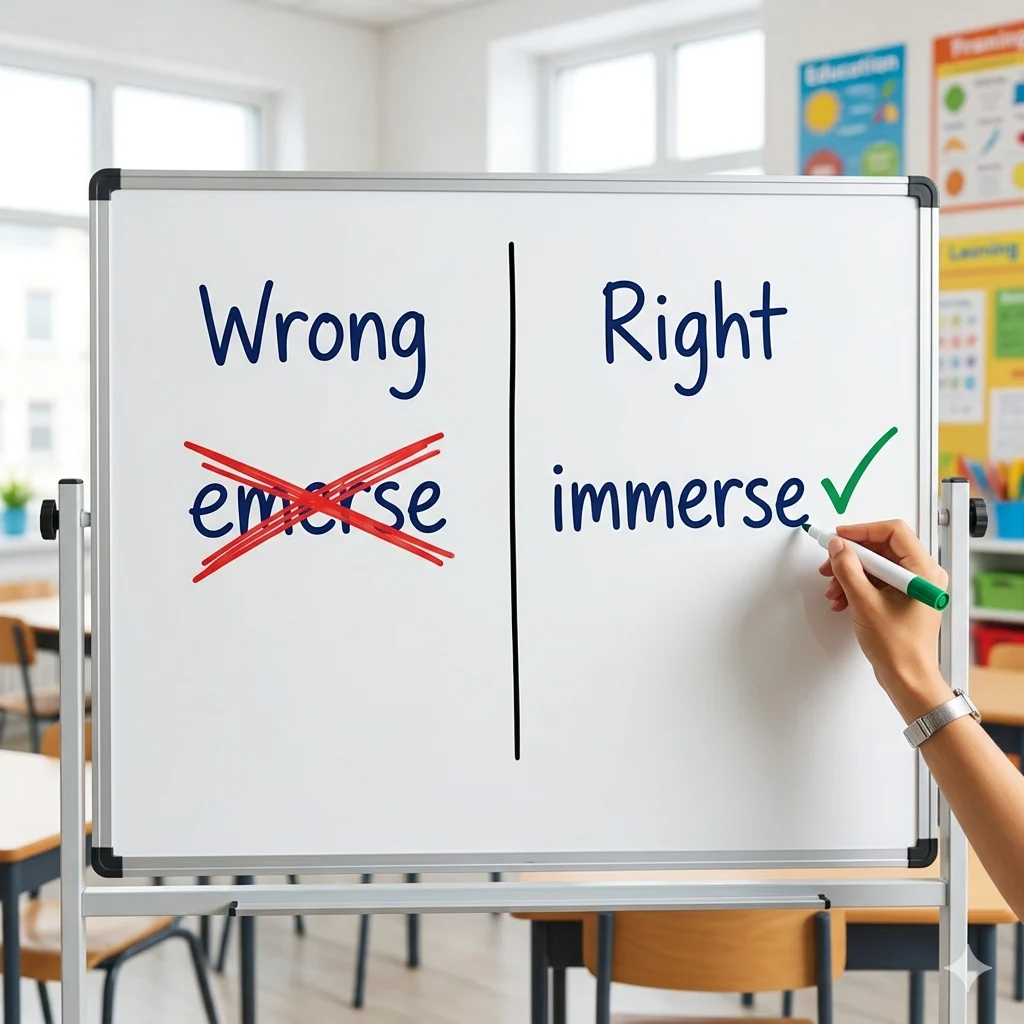
Quick answer: “Immerse” is the correct spelling. “Emerse” is a misspelling and not a real word in standard English.
Example of correct use: “I will immerse myself in my studies.” “She immersed the cloth in water.”
Example of incorrect use: “He will emerse in the pool.” (Wrong – use “immerse”)
What does immerse into mean? It means to put something into a liquid or to become deeply involved in an experience. For example: “He immersed the spoon into the soup.” “She immersed herself into the world of books.”
What does emersion mean? This is a real but rare word. It means the act of coming out of a liquid or emerging. It comes from Latin “emergere” (to rise out). Do not confuse it with “immersion” (going into).
Emerse or immerse meaning: Only “immerse” has a common meaning. “Emerse” has no standard definition.
Emerse or immerse synonym: Synonyms for immerse include: dip, plunge, submerge, douse, sink, engross, absorb, involve.
The Origin of Emerse or Immerse
The word “immerse” comes from Latin. The Latin word is “immersus,” which means “plunged into.” “Im-” means “into” and “mersus” means “dipped or plunged.” So “immerse” literally means “to dip into.”
The word entered English in the early 1600s. It was first used for putting objects into water. By the 1700s, people used it for mental focus too. For example, “immersed in thought” became a common phrase.
What about “emerse”? This mistake happens because of the Latin prefix “e-” which means “out of.” The real word “emerge” (to come out) uses “e-.” People wrongly mix “emerge” with “immerse.” They think “emerse” means “to go into” like “immerse.” But English never accepted “emerse” as a correct word.
Why does the spelling error exist? Words like “emit,” “emerge,” and “eminent” start with “e-.” So the brain wants to write “emerse” by habit. But the correct prefix for “going into” is “im-,” not “e-.” Remember: Im = into, E = out of.
Emerse or immerse in english: English uses only “immerse.” Check any dictionary. You will find “immerse” but not “emerse.” The Oxford English Dictionary has no entry for “emerse” as a verb meaning to plunge into.

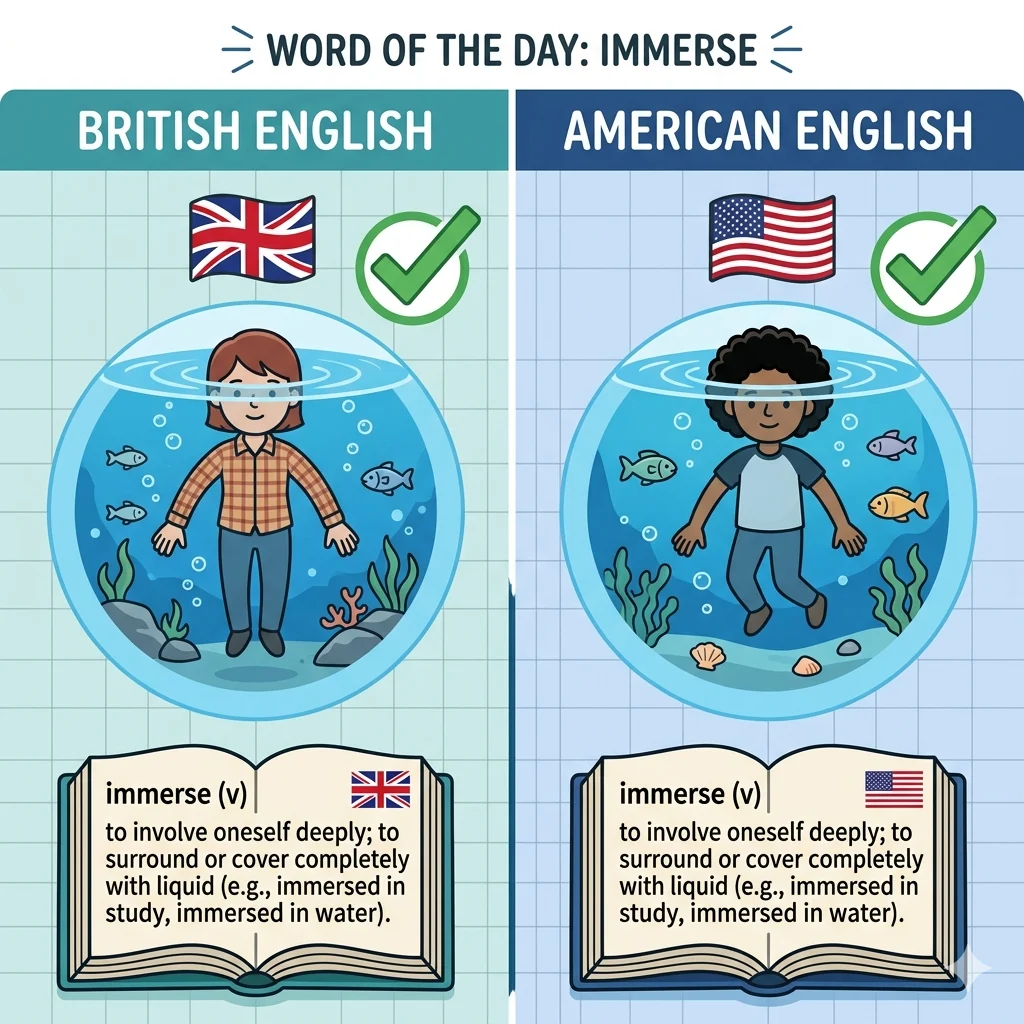
British English vs American English Spelling
Good news: Both British and American English agree on “immerse.” There is no spelling difference. But let us compare related words to see patterns.
| Word | British Spelling | American Spelling |
|---|---|---|
| Immerse | Immerse | Immerse |
| Immersion | Immersion | Immersion |
| Emerge | Emerge | Emerge |
| Emersion | Emersion | Emersion |
| Submerse | Submerse | Submerge (preferred) |
Note on submerge vs immerse: “Immerse” means to put into liquid but not fully cover. “Submerge” means to go completely under. For example, “immerse your feet in water” vs “submerge the whole boat.”
Immerse or emerge: These are opposites. “Immerse” = go into. “Emerge” = come out of. People mix them because they sound similar.
Grammar rules for both spellings: Use “immerse” with the prepositions “in” or “into.” Both are correct. “Immerse in” is more common for abstract ideas. “Immerse into” is fine for physical actions.
Examples:
- “She immersed herself in her work.” (abstract)
- “He immersed the brush into the paint.” (physical)
Immerse meaning: The core idea is always about going deep into something – water, activity, or thought.
Which Spelling Should You Use?
For US audiences: Always use “immerse.” Never use “emerse.” If you write “emerse,” readers will think you made a typo. Teachers and editors will correct it.
For UK and Commonwealth audiences: Same rule. Use “immerse.” The error “emerse” is not accepted in British English either. Australian, Canadian, and Indian English all follow this rule.
For global audiences: English learners often ask “emerse or immerse meaning?” Teach them the correct form. Many non-native speakers make this mistake because their language has similar-sounding words. Always write “immerse” in international business, school papers, and online content.
What does immerse mean for professional writing? In academic, legal, or medical writing, “immerse” is the only choice. For example, “Immerse the sample in solution for 24 hours.” Never write “emerse the sample.”
Informal use: Even in texts, social media, or emails, use “immerse.” “Emerse” looks uneducated. If you want to be taken seriously, spell it right.
Emersed vs immersed in culture: This is a very important distinction. “Immersed in culture” means you are fully inside that culture. You live it. You breathe it. You eat the food, speak the language, and follow the customs. For example, “She was immersed in Japanese culture during her year in Tokyo.”
What about “emersed in culture”? This phrase is not correct. There is no standard phrase “emersed in culture” because “emersed” means raised above water (only in botany). If someone says “emersed in culture,” they would mean standing outside the culture, looking in. But English does not use it that way. Always say “immersed in culture.” A study abroad student is immersed in a new culture. A tourist watching from a bus is not immersed. Use “immersed” for deep involvement. Never use “emersed” when talking about culture.
Common Mistakes with Emerse or Immerse
Mistake 1: Writing “emerse” instead of “immerse”
- Wrong: “I want to emerse myself in Spanish.”
- Right: “I want to immerse myself in Spanish.”
Mistake 2: Confusing “immerse” with “submerge”
- Wrong: “Immerse the entire car in water.” (Too much – use submerge)
- Right: “Submerge the entire car in water.” or “Immerse the tires in water.”
What is immerse vs submerge? Immerse is for partial or full but gentle dipping. Submerge is for complete coverage under liquid.
Mistake 3: Using the wrong preposition
- Wrong: “She immersed at the pool.”
- Right: “She immersed herself in the pool.” or “She immersed herself into the pool.”
Mistake 4: Mixing up “immerse into” vs “immerse in”
- Both are correct. But “immerse in” is more common for feelings and thoughts. “Immerse into” works for physical actions.
Mistake 5: Spelling “immersion” as “emersion”
- Wrong: “The emersion program lasted one week.”
- Right: “The immersion program lasted one week.”
- Remember: Immersion = going into. Emersion = coming out of.
Mistake 6: Using “emerse” because of “emerge”
- Wrong: “He will emerse from the water.” (Use “emerge”)
- Right: “He will emerge from the water.”
What is immerse vs emerge? Immerse means go into. Emerge means come out of. They are complete opposites.
How to avoid these mistakes: Say this rule out loud: “I go in with im.” The prefix “im-” always means “into.” “E-” means “out.” If you mean “into,” use “im.”
Emerse or Immerse in Everyday Examples
Emails:
- Correct: “I plan to immerse myself in the new project this quarter.”
- Correct: “Please immerse the sensor in the liquid for exactly 10 seconds.”
- Wrong: “I will emerse in the training materials.” (Use immerse)
News headlines:
- “Students Immerse Themselves in Local Culture During Exchange Program”
- “Virtual Reality Lets Users Immerse into Ancient Rome”
- Never: “Emerse” – you will not find this in professional news.
Social media:
- “Immersed in a good book today 📚 #reading”
- “Ready to immerse myself in yoga and mindfulness”
- “Don’t just watch the documentary – immerse yourself in the story”
- Wrong tweet: “Gonna emerse in some Netflix” (Correct to “immerse”)
Formal writing (academic or business):
- “The study required participants to immerse their hands in cold water.”
- “Employees should immerse themselves in the company’s core values.”
- “To learn a language quickly, immerse yourself in a country where it is spoken.”
Emerse or immerse examples for daily life:
- Cooking: “Immerse the potatoes in boiling water.”
- Cleaning: “Immerse the sponge into soapy water.”
- Learning: “Immerse your child in books from an early age.”
- Travel: “Immerse yourself in local traditions.”
- Technology: “The VR headset immerses you into a new world.”
Immerse vs submerge in real life: If you put vegetables in soup, you immerse them. If you sink a toy boat completely, you submerge it.
Emersed vs immersed in culture example: A student living with a host family in Mexico is immersed in Mexican culture. A person who only reads a book about Mexico is not immersed. Never say “emersed in culture” – it is incorrect.
Emerse or Immerse – Google Trends & Usage Data
Google search data shows that “immerse” is searched far more often than “emerse.” For every 1,000 searches for “immerse,” only about 3 people search for “emerse.” Most of those are people checking if it is a real word.
Popularity by country:
- United States: “Immerse” is 99% of searches. “Emerse” appears in misspelling queries.
- United Kingdom: Same pattern. British users search “immerse” almost exclusively.
- India: “Immerse” is common. Many learners search “emerse or immerse meaning” to check.
- Australia: “Immerse” dominates. “Emerse” appears rarely.
- Canada: French-English bilingual users sometimes confuse spelling, but “immerse” is standard.
Context of use:
- “Immerse” is most searched with words like: language learning, virtual reality, water, culture, and baptism.
- “Emerse” searches often include: “is emerse a word,” “emerse vs immerse,” and “define emerse.”
Seasonal trends: Searches for “immerse” rise in January (New Year’s resolutions to learn skills) and September (back to school). Baptism-related searches peak before Easter.
What does immerse mean in search? Most people search for definition, synonyms, and examples. Many also search for “immerse meaning in Hindi,” “immerse in Spanish,” or other translations.
Emerse or immerse synonym searches: People look for synonyms like “engross,” “absorb,” “plunge,” and “dip.” These words help writers avoid repeating “immerse.”
Immerse meaning in everyday search: Users want clear, simple answers. They type “immerse definition” or “immerse example sentence” more than any other related phrase.
Comparison Table: Emerse vs Immerse vs Related Words
| Word | Part of Speech | Meaning | Correct? |
|---|---|---|---|
| Immerse | Verb | To plunge into liquid or become fully involved | ✅ Yes |
| Immersed | Adjective | Fully involved or under liquid | ✅ Yes |
| Immersion | Noun | The act of immersing | ✅ Yes |
| Emerse | Verb (fake) | None – common misspelling of immerse | ❌ No |
| Emersed | Adjective | Raised above water (botany term only) | ✅ Yes (rare) |
| Emersion | Noun | The act of emerging from liquid | ✅ Yes (rare) |
| Emerge | Verb | To come out of something | ✅ Yes |
| Submerge | Verb | To put completely under liquid | ✅ Yes |
| Submerse | Verb | Less common spelling of submerge | ⚠️ Rare |
Quick memory trick: “IMMERSE has two Ms – one for ‘Myself’ and one for ‘My activity.’ EMERSE has no Ms – it is ‘Empty of Meaning.'”
FAQs
1. Is “emerse” a real word?
No, “emerse” is not a real word in standard English. It is a common misspelling of “immerse.” Some rare technical fields use “emersed” for plants, but never “emerse” as a verb.
2. What does immerse mean?
Immerse means to put something completely into a liquid or to become deeply involved in an activity or subject. Example: “She immersed herself in the novel.”
3. What does immerse into mean?
“Immerse into” means to put something into a liquid or to become deeply engaged in an experience. It is used the same way as “immerse in,” but “into” emphasizes movement. Example: “He immersed the spoon into the honey.”
4. What does emersion mean?
Emersion means the act of rising or coming out of a liquid. It is the opposite of immersion. Example: “The scientist observed the emersion of the submarine.” This word is rare.
5. Emerse or immerse – which is correct for school essays?
Always use “immerse.” Teachers will mark “emerse” as a spelling error. If you are writing about plants, “emersed” is allowed in biology class, but never “emerse.”
6. What is the difference between immerse and submerge?
Immerse means to put into liquid but not necessarily cover completely. Submerge means to go completely under. You immerse your feet in a bath. You submerge a drowning phone.
7. What is the difference between immerse and emerge?
Immerse means to go into. Emerge means to come out of. They are opposites. Example: “Dive to immerse yourself. Surface to emerge.”
8. Emersed vs immersed in culture – what is the difference?
“Immersed in culture” means fully involved inside a culture. “Emersed in culture” is not a correct phrase. Always use “immersed in culture.” Example: “Living in Paris immersed her in French culture.” Never write “emersed in culture.”
9. Can I use “emerse” on social media?
You can, but people will think it is a typo. For better engagement and clarity, use “immerse.” Correct spelling makes you look more professional.
10. What is a good synonym for immerse?
Good synonyms include: dip, plunge, submerge, douse, engross, absorb, involve, and engage.
11. How do I remember the correct spelling?
Think: “IM” means “IN.” You go INto water with IMmerse. “E” means “EXIT” or “OUT.” You come OUT with Emerge. Remember forever: Im = in, E = exit.
Conclusion
You now know the full answer to the question “emerse or immerse?” The correct spelling is always “immerse.” “Emerse” is not a real word. It is a common mistake caused by mixing “immerse” with “emerge.” Remember the simple rule: Im = into, E = out of.
Use “immerse” when you talk about putting something in liquid. Use it when you talk about focusing deeply on a task, hobby, or study. “Immerse yourself in learning,” “immerse the cloth in dye,” or “immerse into a new culture.” All of these are correct. Never write “emerse” in school, work, or everyday writing.
Also remember the difference between related words. Immerse vs submerge – immerse is gentle dipping, submerge is full coverage. Immerse vs emerge – one is going in, one is coming out. And for culture, always say immersed in culture, never “emersed in culture.”
If you need a synonym, try “dip,” “plunge,” “submerge,” or “engross.” Keep this article as a guide. Bookmark it. Share it with friends who ask “emerse or immerse?” Now go and confidently use the correct word. Your writing will be clearer, more professional, and error-free.

“Rose Macaulay shares thoughtful, faith-inspired reflections on Praydrop, guiding readers with wisdom, hope, and spiritual insight for everyday life.”