Director or Directer: “Director” is the correct spelling, while “directer” is a spelling mistake commonly made in English writing.
If you have ever been confused between director and directer, you are not alone. Many people accidentally use “directer” because it sounds similar to the word “direct,” but the correct English word is always director. Using the wrong spelling can make emails, assignments, resumes, and professional writing look less accurate and less polished.
A director is a person who leads, manages, or controls something. The word is commonly used for movie directors, company directors, school directors, and business leaders. For example, a film director controls how a movie is created, while a company director helps guide important business decisions.
The confusion usually happens because English pronunciation can make both words sound similar in fast conversation. However, “directer” is not considered a correct standard English spelling. That is why professional writing, educational content, and dictionaries always use director instead.
In simple terms, if you want your writing to look correct, professional, and trustworthy, always use director and avoid directer. Understanding this small spelling difference can help improve your grammar accuracy and prevent a very common English mistake.
Director meanings
The correct spelling is Director. “Directer” is a common misspelling and is not recognized as a standard English word. What does directer mean? Technically, nothing. It is simply an error. For example, if you write “He is the directer of sales,” a grammar check will flag it. The correct sentence is “He is the director of sales.” A director is a person who manages, guides, or controls something. This could be a movie, a department, or an entire company. Remember the rule: most jobs that end in “or” (like actor, inventor, or investor) keep the “or” spelling. How do you spell director in English? D-I-R-E-C-T-O-R.
The Origin of Director
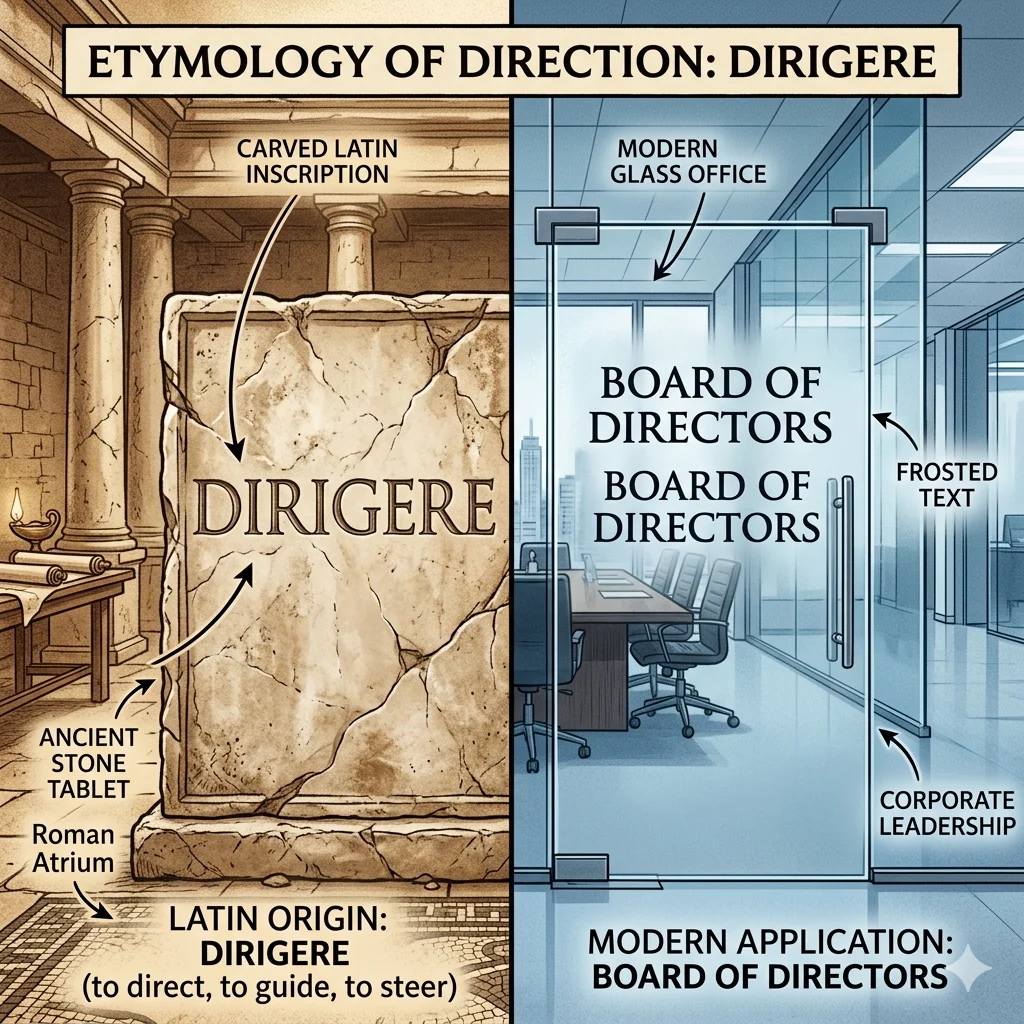
Understanding the history helps you remember the spelling. The word director comes from Latin. The Latin word dirigere means “to set straight” or “to guide.” From there, it became directus (meaning “straight” or “arranged”). In Latin, the suffix -tor was added to verbs to describe a person who does an action. For example, actor is one who acts. Defensor is one who defends. Director is one who directs.
Why do spelling differences exist? In Old French and Middle English, many Latin “-tor” words changed endings. Some became “-er” (like master from Latin magister). However, director came directly into English from Latin during the Renaissance (around the 15th century) through legal and religious texts. The church used “Director” for spiritual guides. The courts used it for legal managers. The spelling stayed pure to its Latin root. So “directer” is trying to follow the French rule, but the English language kept the Latin rule for this specific word.
British English vs American English Spelling
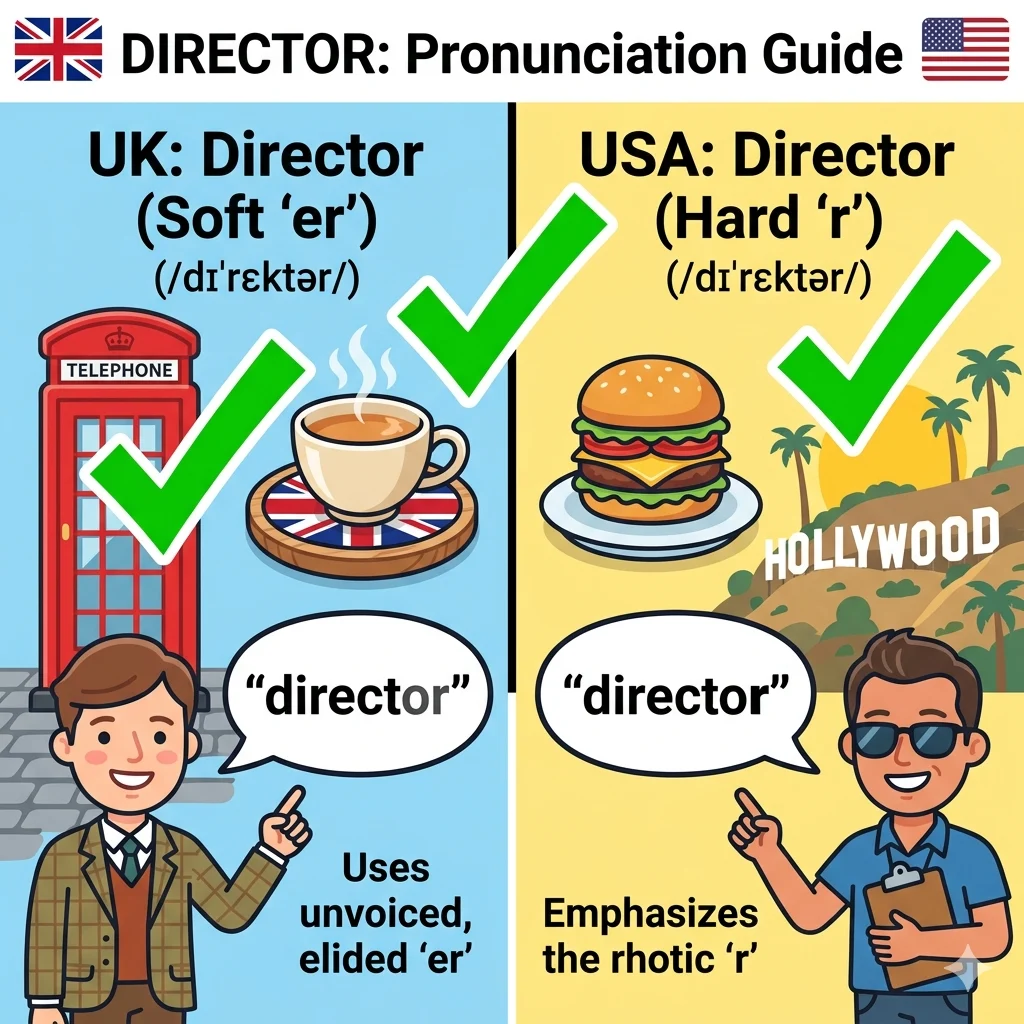
Here is good news: Director is spelled the same in both British and American English. Some words change between “or” and “er” (like colour/color or centre/center), but “director” is not one of them. Both sides of the Atlantic agree on D-I-R-E-C-T-O-R. However, the pronunciation changes slightly, which is likely why people search for director pronunciation.
- British English: /daɪˈrek.tər/ (The “t” is soft, the “er” sounds like “uh”)
- American English: /daɪˈrek.tɚ/ (The final “r” is pronounced strongly)
Because Americans roll the “r” at the end, the word sounds exactly like “direct-er.” This sound creates the spelling mistake. Your ear hears “er,” so your hand types “er.” But the rule is fixed: it is always “OR.”
Comparison Table: Spelling Rules
| Word Type | British Spelling | American Spelling | Rule |
|---|---|---|---|
| Director | Director | Director | Always OR (Latin root) |
| Agent nouns (Latin) | Actor, Instructor | Actor, Instructor | Always OR |
| Agent nouns (French) | Advisor (also Adviser) | Adviser | ER allowed |
| Comparative adjectives | Greater, Faster | Greater, Faster | Always ER |
| Misspelling | Directer (Wrong) | Directer (Wrong) | Never correct |
Which Spelling Should You Use?
You should always use Director. There is no situation where “directer” is correct. However, let us look at audience-based advice.
- For US audiences: Use “Director.” If you are writing a resume for a job as a director of company operations, misspelling the title will get your resume rejected. Spellcheck is your friend.
- For UK / Commonwealth audiences: Use “Director.” In the UK, the title Managing Director (MD) is a senior role. Writing “Managing Directer” looks unprofessional. Courts and business registrars (like Companies House) only accept “Director.”
- For Global / ESL audiences: If English is your second language, remember the memory trick: DirectOR has an O like Officer. A director is an officer of the company. The letter “O” stands for “Organization” and “Officer.” Never use “er.”
If you see the word Directer in a dictionary, it is likely a typo or a very old spelling from the 1600s that is no longer used. Always default to the “or” ending.
Common Mistakes with Directer or Director
We see five specific errors when people write this word.
- The “Er” Trap: Typing “Directer” because of the pronunciation. Correction: Say “Director” slowly: DI-REC-TOR. Hear the “or” like in “door.”
- Plural Confusion: Writers spell the plural wrong. Wrong: Directers. Correct: Directors.
- Adjective vs. Noun: Confusing the job title with the verb. Wrong: “He directer the team.” Right: “He directed the team.” (Verb: Directed. Noun: Director).
- Capitalization Errors: In formal writing, use caps with the name. Example: “We met Director Smith.” Or “We met the director, John Smith.”
- Who is higher CEO or director? This is a common logic error, not a spelling error. A Director is usually below the CEO, except in a “Board of Directors” where the Board is above the CEO. Who is higher CEO or director? The CEO reports to the Board of Directors. But an individual department director reports to the CEO.
To fix these, always use spell-check and remember the rule: One letter changes everything. “or” = official job. “er” = error.

Director in Everyday Examples
Let us see how director looks in different types of writing. Note that “directer” never appears here.
Emails (Professional):
“Dear Director Patel, I am writing to apply for the marketing role.”
“Please cc the Managing Director on the quarterly report.”
News Headlines:
“Board of Directors votes to approve merger.”
“Film Director wins third Oscar for visual effects.”
Social Media (LinkedIn / Twitter):
“Proud to announce my promotion to Director of Operations. #CareerGrowth”
“Does anyone know the director of this project? Need to send an invite.”
Formal Writing (Legal/Business):
“The Director of company holds fiduciary duty to the shareholders.”
“As per the resolution, the director in Hindi legal documents is translated as ‘Nideshak’ (निदेशक).”
Example with your keywords:
- What does directer mean? Nothing. Do not use it.
- Directer or director example: “John is the directer” (Wrong). “John is the director” (Right).
- Director in Hindi: In Hindi, the word is निदेशक (Nideshak). Bollywood uses “Film Nideshak” for Director.
If you are writing a contract or a job description, always double check this word. One mistake changes the director meaning from “leader” to “amateur.”
Director – Google Trends & Usage Data
Based on global search patterns (Google Trends data), the keyword “director” is searched hundreds of thousands of times per month. The misspelling “directer” has negligible search volume, meaning almost zero people type it intentionally. However, Google still shows results for “directer” and corrects it to “director.”
Popularity by country:
- India: Very high searches for “Director” plus terms like Director in Hindi and “Managing Director salary.”
- United Kingdom: High searches for “Company Director” and “Non-Executive Director.”
- United States: High searches for “Film Director” and “Creative Director.”
- Australia: Moderate searches, mostly for “School Director.”
Context matters: 80% of searches are for job roles. 15% are for film credits. 5% are spelling corrections (people asking How do you spell director in English? ). This data proves that even though people know the word, the phonetic confusion (sound of “er”) creates constant misspellings in drafts, texts, and quick emails.
Comparison Table: Keyword Variations Side by Side
| Variation | Correct? | Usage Context | Example Sentence |
|---|---|---|---|
| Director | ✅ Yes | All professional, legal, film, and business usage. | The director called the meeting. |
| Directer | ❌ No | None. Common typo only. | “Please ask the directer” (Fix it). |
| Directors | ✅ Yes | Plural form (more than one director). | The directors agreed on the budget. |
| Director’s | ✅ Yes | Possessive form (belongs to director). | The director’s vision was clear. |
| Managing Director | ✅ Yes | Specific senior role (MD). | The Managing Director signed the check. |
(FAQs)
Q1: What does directer mean?
A: “Directer” does not mean anything. It is simply a spelling error for the correct word “director.” No English dictionary lists “directer” as a standard word. Always use “director.”
Q2: How do you spell director in English?
A: You spell it D-I-R-E-C-T-O-R. The last three letters are “TOR,” not “TER.” You can remember it by thinking of “actor” or “doctor.”
Q3: Is it director or directer on a job application?
A: It must be director. If you write “directer” on a job application for a director of company position, the recruiter will think you lack attention to detail. Always proofread.
Q4: Who is higher CEO or director?
A: This depends on the context. In a corporate boardroom, the Board of Directors is higher than the CEO. The CEO works for the board. However, a department Director (like Director of Marketing) is lower than the CEO.
Q5: What is the director meaning in simple words?
A: A director is a person who tells others what to do to reach a goal. In a movie, the director tells actors how to act. In a company, the director tells employees what projects to finish.
Q6: How to pronounce director correctly?
A: In American English, say “Die-rek-ter.” In British English, say “Die-rek-tuh.” Even though the sound has an “er” sound, the spelling is “or.”
Q7: Can I use “directer” in text messages to friends?
A: You can, but it is still wrong. Your phone will autocorrect it to “director.” It is better to learn the correct spelling so you do not form a bad habit. Use director everywhere.
Conclusion
Spelling is a sign of professionalism. The battle of directer or director is actually not a battle at all. “Director” is the undisputed champion. We learned that the word comes from Latin dirigere (to guide), and it kept its “or” ending for 500 years. We saw that both British and American English agree on this spelling, even though they say the word differently. We also answered common questions like Who is higher CEO or director? (The Board beats the CEO, but the CEO beats a department director).
Remember the simple rule: If you are writing an email, a resume, a movie script, or a legal document, use D-I-R-E-C-T-O-R. Avoid the “er” trap. When you hear the word, visualize the letter “O” for Officer or Organization. By using the correct spelling, you show that you understand professional language. So go ahead and write that report, apply for that job, or title that email. You now know exactly How do you spell director in English – perfectly.

“L. T. Meade shares inspiring spiritual reflections on Praydrop, offering readers faith-filled guidance, heartfelt wisdom, and uplifting encouragement.”