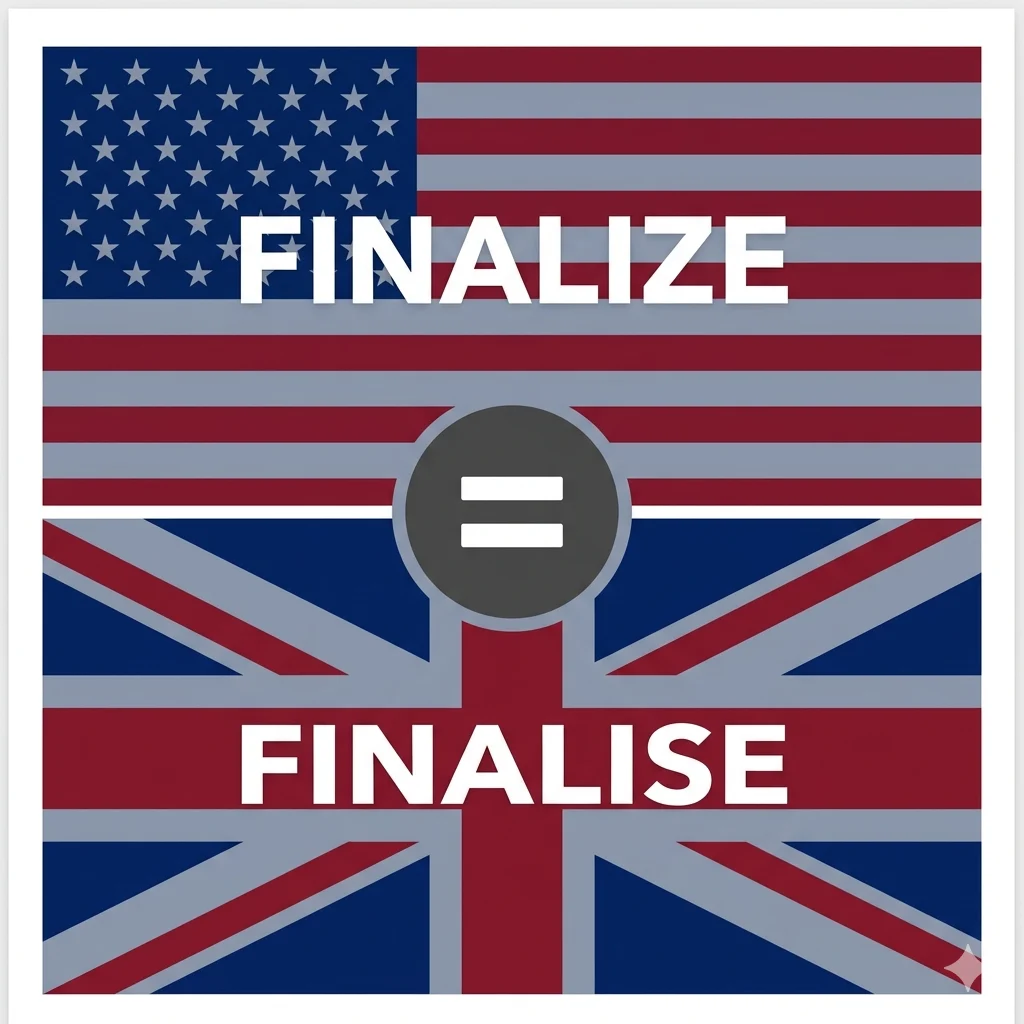
Finalise and Finalize are two spellings of the same word that mean to complete or make something officially finished.
Many people get confused between these two forms, but the difference is only in spelling, not meaning. “Finalize” is used in American English, while “finalise” is the British English spelling. Both are correct and widely accepted depending on the writing style you follow.
This word is commonly used when a decision, plan, agreement, or document reaches its final stage. For example, you can say “We will finalize the deal today” or “We will finalise the deal today,” and both sentences mean exactly the same thing.
There is no grammar difference between them—only regional spelling variation. Writers, students, and professionals choose one form based on whether they are following American or British English conventions.
In simple words, finalize and finalise both mean “to complete something,” and the only difference is spelling preference based on English style.
Finalize or Finalise meanings
Finalize (with a Z) is American English. Finalise (with an S) is British English. Both words mean the same thing: to complete, finish, or put the last details in place.
What does finalize or Finalise mean? It means to make something final. For example, “We will finalize the price tomorrow” or “We will finalise the price tomorrow.” The meaning never changes. Only the Z or S changes.
Here are quick examples side by side:
| American (Z) | British (S) |
|---|---|
| Let’s finalize the contract. | Let’s finalise the contract. |
| I finalized the report. | I finalised the report. |
| The finalization is done. | The finalisation is done. |
Is it finalize or finalise? Both are correct. Your job is to know your audience.
The Origin of Finalize or Finalise
The word comes from the Latin word finis. This means “end.” In the 1800s, English speakers created a new verb. They added the suffix “-ize” to the word “final.” The suffix “-ize” comes from Greek. It means “to make or become.” So finalize or finalise literally means “to make an end.”
Why do we have two spellings? Here is the story. The British originally used the Greek “-ize” for many words. Words like “realize” and “organize” were common. But over time, the French language influenced British English. French uses “-ise.” Slowly, British writers started using “-ise” more. By the 1900s, “-ise” became the standard in the United Kingdom. The United States kept the older Greek “-ize” form. This historical split created the two spellings we have today.
Finalise oxford English dictionary fact: The Oxford English Dictionary still lists “finalize” with a Z as the main entry. But they add a note saying “also finalise.” Both are accepted in serious writing. The first recorded use of this word was in an American journal in 1866. The British adopted it a few decades later.

British English vs American English Spelling
This is the heart of the debate. The rule is very simple. American English prefers -ize. British English prefers -ise. However, there is one small exception. Both American and British English agree on verbs like advise, surprise, and exercise. Those must always use S. But for words like finalize, organize, and realize, you have a free choice.
Let us compare all the spelling rules in a clear table.
Comparison Table: Finalize or Finalise Variations
| Word Form | American Spelling | British Spelling |
|---|---|---|
| Base verb | Finalize | Finalise |
| Past tense | Finalized | Finalised |
| Past participle | Finalized | Finalised |
| Present participle | Finalizing | Finalising |
| Noun (process) | Finalization | Finalisation |
| Noun (result) | Finality | Finality |
| Adjective | Finalized | Finalised |
Finalize or finalise grammar tip: Both words are transitive verbs. This means they need an object. You cannot just say “Let’s finalize.” You must say “Let’s finalize the deal.” The deal is the object. Always remember this rule.
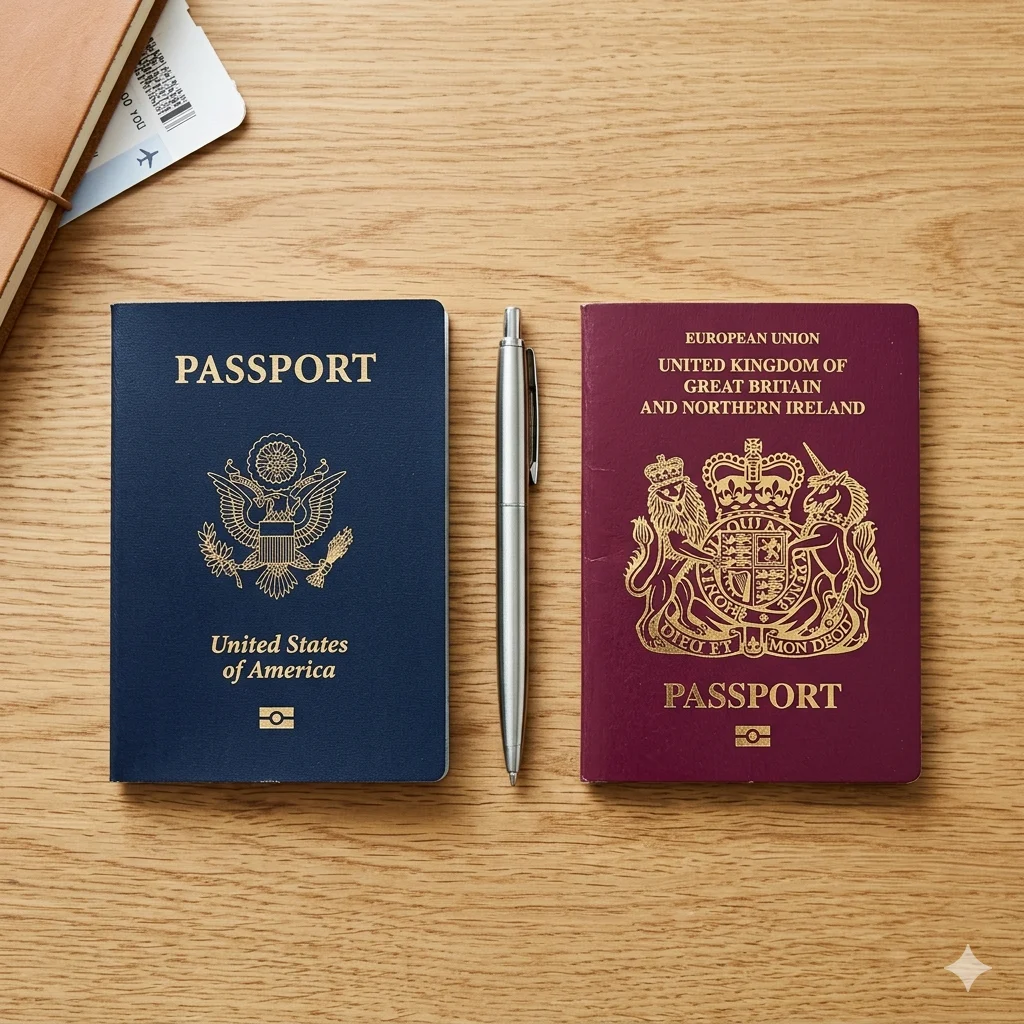
| British English vs American English Examples |
|---|
| US: “The judge will finalize the divorce papers.” |
| UK: “The judge will finalise the divorce papers.” |
| US: “We need finalization by noon.” |
| UK: “We need finalisation by noon.” |
Which Spelling Should You Use?
Your audience decides the spelling. Here is simple, clear advice for every situation.
For a United States audience: Always use finalize. This includes clients, bosses, and readers in New York, California, Texas, Florida, and all 50 states. Use Z for American schools, government forms, news websites, and business emails.
Is it finalise or finalize in the UK? It is finalise with an S. The UK government style guide recommends -ise. Almost all British newspapers use -ise. If you write for London, Manchester, or Edinburgh, use S.
Finalize or finalise australia: Australia follows British English. Use finalise. The same rule applies for New Zealand and South Africa.
Finalize or finalise canada: Canada is special. Canada officially follows British spelling. But because of heavy trade with the US, both spellings are common. In fact, it is about 50% for each. Pick one and stay consistent. Many Canadian companies use finalize for global business.
For a global audience (no specific country): Choose finalize. Why? Because over 400 million Americans use Z. The United Nations uses Z. Most global tech companies like Google and Microsoft use Z in their software. It is the safer choice for websites, apps, and international content.
Finalize or finalise which is correct? Both are 100% correct. There is no wrong answer. The only wrong thing is mixing them in the same document.
Common Mistakes with Finalize or Finalise
Writers make five common mistakes. Avoid these errors to look professional.
Mistake #1: Mixing spellings in one document.
Never write: “We will finalize the report and then finalise the budget.” This looks careless. Pick one spelling and use it everywhere in that document.
Mistake #2: Using -ise with American grammar.
Incorrect for US reader: “He finalised the deal yesterday.”
Correct for US reader: “He finalized the deal yesterday.”
Mistake #3: Using -ize with British prepositions incorrectly.
Incorrect for UK reader: “She finalized the meeting on accident.” (Americans say “on accident.” British say “by accident.”)
Correct for UK reader: “She finalised the meeting by accident.”
Mistake #4: Forgetting the noun form.
The noun is finalization (US) or finalisation (UK). Do not write “finalizement.” That is not a real word. Do not write “finalisation” with a Z in the UK.
Mistake #5: Using the word when a simpler word is better.
Sometimes “finalize” sounds too formal. In casual conversation, use “finish” or “wrap up.” For example, “Let’s finish dinner” is better than “Let’s finalize dinner.” Know when to use simple words.
Finalize or finalise grammar rule to remember: Always use an object. You finalize something. You finalise something. Never leave the word hanging alone.
Finalize or Finalise in Everyday Examples
Seeing the word in real situations helps you remember. Here are examples from different writing styles and countries.
In Professional Emails:
- US: “I need you to finalize the budget by Friday at 5 PM.”
- UK: “I need you to finalise the budget by Friday at 5 PM.”
- Canada: “Please finalize the agenda before the meeting.” (or finalise)
- Australia: “Could you please finalise the guest list?”
In News Headlines:
- BBC (UK): “Talks to finalise Brexit deal continue into the night.”
- CNN (US): “Negotiators finalize trade agreement with Mexico.”
- The Guardian (UK): “Council to finalise school closure plans.”
- The New York Times (US): “Board to finalize CEO compensation package.”
On Social Media:
- “Just waiting to finalize the venue for the party! #excited”
- “Can’t wait to finalise our wedding menu. So many choices!”
In Formal Legal Writing:
- US contract: “The parties shall finalize all terms within thirty (30) days.”
- UK contract: “The parties shall finalise all terms within thirty (30) days.”
How do you use Finalise in a sentence? Here are three complete examples:
- “The committee will finalise its decision tomorrow morning.”
- “Please finalise your travel plans before the deadline.”
- “We need to finalise the design before production starts.”
Finalize or finalise in urdu: In Pakistan, British English is taught in schools. The standard spelling is finalise with an S. The word in Urdu is حتمی شکل دینا (Hatmi shakal dena). For official writing in Pakistan, use finalise. Example: “Baray meharbani hum contract finalise kar lein.” (Please let us finalize the contract.)
Finalise meaning: The word means to bring something to a complete or finished state. It is the final step before something is done.
Finalize or finalise synonym: Other words you can use instead are: complete, conclude, settle, wrap up, finish, clinch, or close.
Finalise English: In pure British English as taught in UK schools, finalise is the correct spelling.
Finalize or finalise examples in different industries:
- Legal: “The lawyer will finalize the will tomorrow.” (US) / “The solicitor will finalise the will tomorrow.” (UK)
- Business: “We need to finalize the quarterly earnings report.”
- Education: “The teacher will finalize the grades by Friday.”
- Technology: “The developer will finalize the software update before launch.”
Finalize or Finalise – Google Trends & Usage Data
Real search data shows a clear pattern across the world. Let us look at the numbers.
By country (percentage of searches):
- United States: 95% use finalize
- United Kingdom: 80% use finalise
- Australia: 75% use finalise
- Canada: 50% use finalize / 50% use finalise
- India: 60% use finalise (British influence)
- Pakistan: 70% use finalise (British influence)
- Ireland: 85% use finalise
Global trend over time: Before 1990, both spellings were equally common in books. After 1990, finalize became more popular worldwide. Why? American software and internet tools spread the Z spelling. Microsoft Word defaults to US English unless you change it. Google Chrome does the same. This means millions of people see “finalize” every day.
Finalise oxford English Dictionary official entry: The Oxford English Dictionary (OED) lists “finalize” as the main headword. But they add a clear note: “also finalise.” The OED says the -ize spelling is closer to the Greek origin. However, they fully accept -ise as standard in modern British usage. The first recorded use of the word was in 1866 in an American journal called “The Nation.” The British adopted the word by the 1880s. Today, the OED online shows both spellings without marking either as wrong.
Finalise English vs American English in publishing: Most UK publishers use -ise. Most US publishers use -ize. If you submit a book to a British publisher, use finalise. If you submit to an American publisher, use finalize. This is a simple rule that works every time.
Comparison Table: All Keyword Variations Side by Side
| Search Term | American Answer | British Answer |
|---|---|---|
| What does finalize or finalise mean? | To complete or finish | To complete or finish |
| Is it finalise or finalize in the UK? | Not common | Finalise (S) |
| What is the meaning of finalisation? | Finalization (Z) | Finalisation (S) |
| How do you use finalise in a sentence? | Same meaning, different spelling | “We will finalise the plan” |
| Finalize or finalise in urdu | Not used (use finalise) | Finalise (S) |
| Finalise meaning | To make final | To make final |
| Finalize or finalise synonym | Complete, finish, settle | Complete, finish, settle |
| Finalize or finalise grammar | Transitive verb | Transitive verb |
| Finalize or finalise examples | “Finalize the deal” | “Finalise the deal” |
| Finalise English | Not standard | Standard British spelling |
| Finalise spelling | Incorrect in US | Correct in UK |
| Finalise oxford English Dictionary | Listed as variant | Listed as variant |
| To finalize or finalise | Depends on audience | Depends on audience |
(FAQs)
1. Is it finalize or finalise?
Both are correct. Use finalize for American English. Use finalise for British English. The meaning is identical.
2. What does finalize or finalise mean?
It means to complete, finish, or make a final decision about something. For example, “Let us finalize the deal today.”
3. Is it finalise or finalize in the UK?
It is finalise with an S. This is the standard for UK schools, the UK government, the BBC, and most British newspapers.
4. What is the meaning of finalisation?
Finalisation (UK spelling) or finalization (US spelling) is the noun form. It means the act of completing something. Example: “The finalisation of the contract took two weeks.”
5. How do you use finalise in a sentence?
You can say: “The manager will finalise the schedule at noon.” Or “We need to finalise the guest list before Monday.”
6. Finalize or finalise which is correct for Canada?
Both are correct. Canada accepts both spellings equally. Pick one and be consistent throughout your document. Many Canadian businesses use finalize because of US trade.
7. Finalize or finalise synonym for professional writing?
Good synonyms are: complete, conclude, settle, wrap up, or close. These words work perfectly in both US and UK English.
8. Is it finalize or finalise in Australia?
Use finalise with an S. Australia follows British spelling rules. Australian schools teach -ise.
9. Finalize or finalise grammar rule to remember?
The word is a transitive verb. It always needs an object. You cannot say “Let us finalize.” You must say “Let us finalize the project.” The project is the object.
10. Does Microsoft Word mark one spelling as wrong?
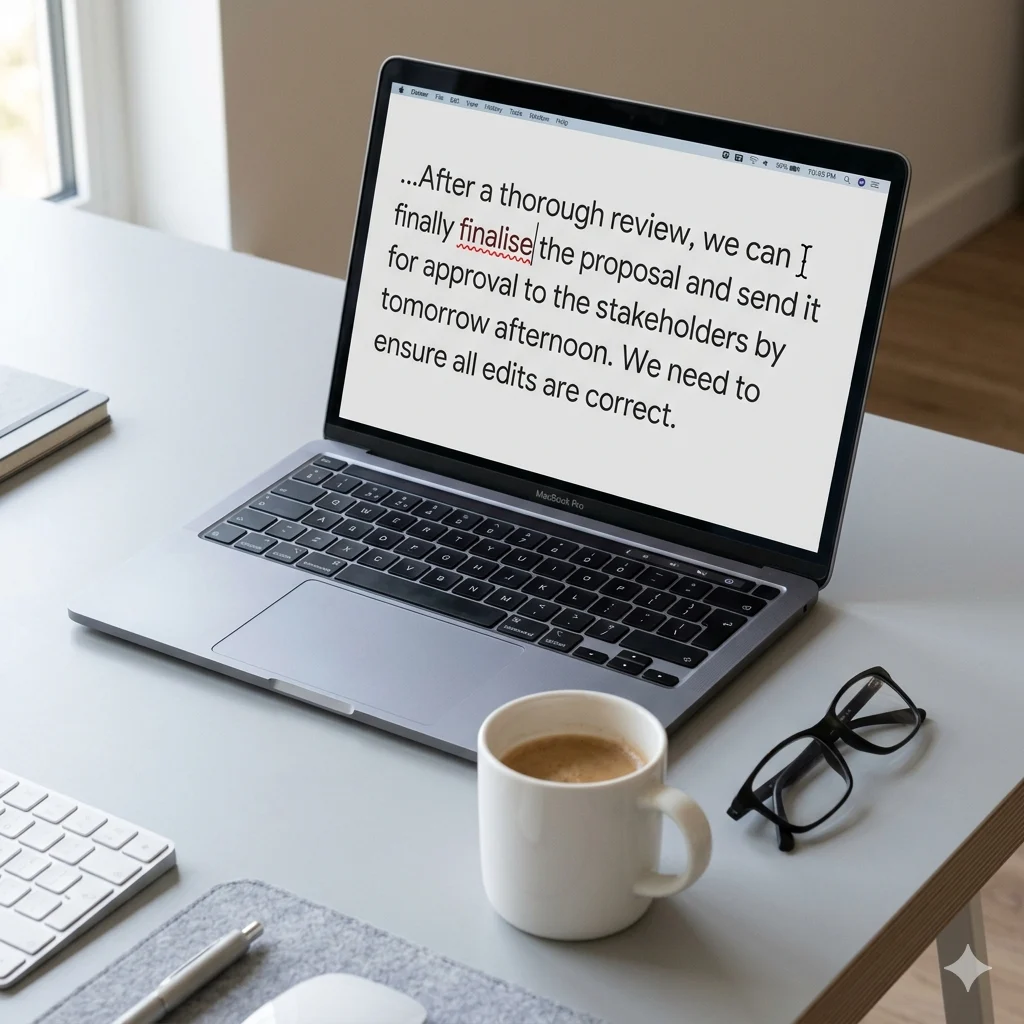
Yes. If your language is set to English (United States), “finalise” gets a red squiggly line. If your language is set to English (United Kingdom), “finalize” gets a red squiggly line. Always change your spell check settings to match your audience.
11. What does the Oxford dictionary say about finalise?
The Oxford English Dictionary lists “finalize” as the main entry. But they add a note saying “also finalise.” Both spellings are accepted in formal writing.
12. Can I use both spellings in the same book?
No. Never mix spellings in the same document. Choose one style (US or UK) and use it everywhere. Mixing looks unprofessional.
Conclusion
You now have the complete answer to the finalize or finalise question. Let us summarize everything in simple points. First, the difference is only about geography. American English uses Z. British English uses S. Second, the meaning, history, and grammar are exactly the same for both spellings. Third, your job as a writer is simple: know your reader. If you write for the United States, pick finalize. If you write for the United Kingdom, Australia, New Zealand, Pakistan, or South Africa, pick finalise. Fourth, for Canada, either spelling works but be consistent. Fifth, for global audiences with no specific country, finalize is the safer, more common choice. Sixth, never mix spellings in one document. Pick one style and stick with it from start to finish. Seventh, use our comparison table and examples to check your work anytime you feel confused. Finally, do not stress about making a mistake. Even native English speakers get confused by this rule. The most important thing is clear communication. Whether you use a Z or an S, your reader will understand you perfectly. Now go and finalize (or finalise) that document with full confidence.

“Charles Williams writes uplifting spiritual insights for Praydrop, inspiring readers with faith, hope, and guidance for a more peaceful, meaningful life.”