May and Can are helping verbs used to talk about permission, ability, and possibility in English grammar.
Many English learners use may and can interchangeably without realizing that one small mistake can make a sentence sound informal, unnatural, or grammatically incorrect. Although these two words seem similar, they are used in different situations, and understanding their real difference can instantly improve the way you speak and write English.
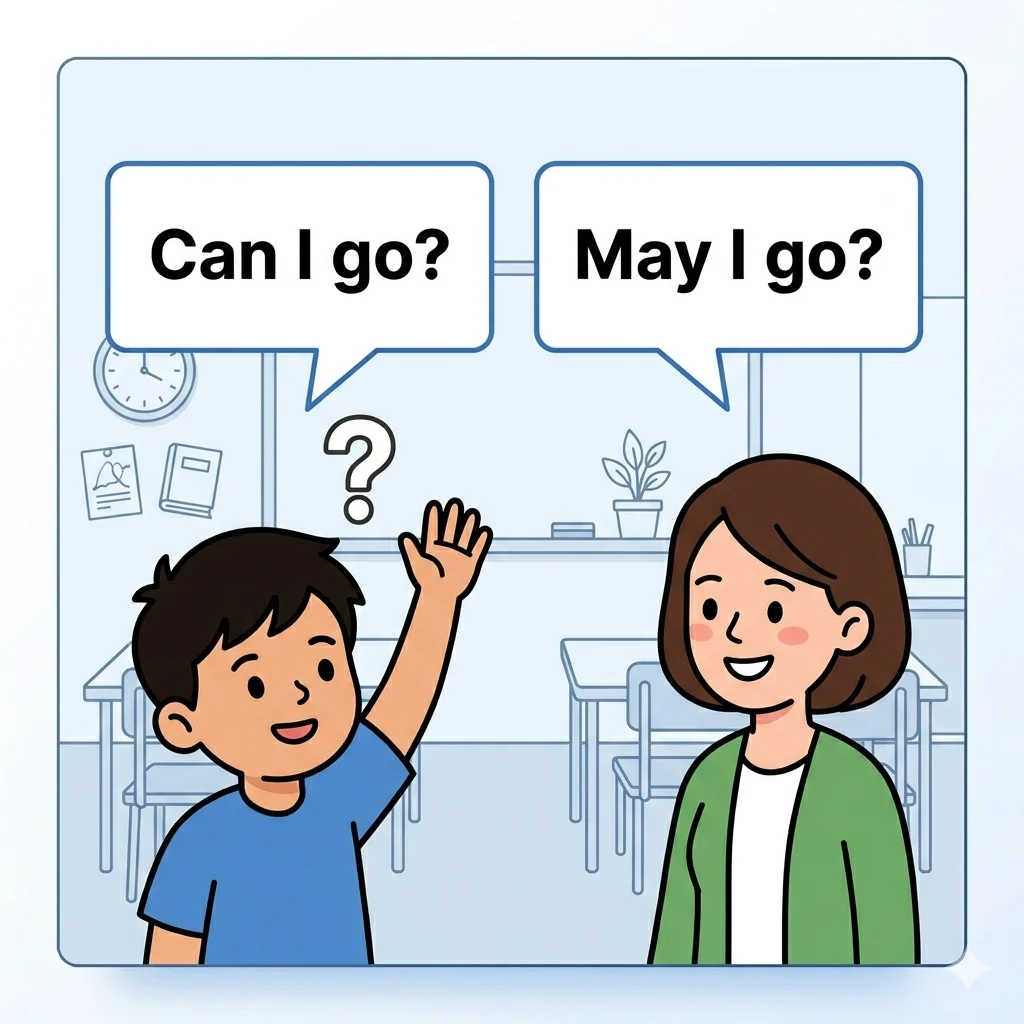
For example, “Can I leave the room?” is commonly used in everyday conversation, while “May I leave the room?” sounds more polite and formal. In simple terms, can is mostly used for ability and casual permission, whereas may is often used for formal permission or possibility.
This confusion is extremely common because both words are connected to permission, yet native English speakers use them differently depending on tone, situation, and meaning. That’s why many students unknowingly make mistakes while speaking or writing English.
Learning the difference between may and can is important because these small helping verbs can completely change how your sentence sounds to others. Using them correctly makes your English clearer, more confident, and more natural.
In this guide, you will learn the exact difference between may and can with simple rules, easy examples, sentence structures, and real-life usage so you can understand when to use each word correctly without confusion again.
May or Can meanings
Use can for ability. Use may for permission.
- Can means you are able to do something. Example: “I can run fast.” (My legs work.)
- May means you have permission. Example: “May I leave early?” (Is it allowed?)
Simple check: If you are asking for permission, may is technically correct. But in casual talk, can is fine.
Examples:
- “Can you swim?” (Asking about ability.)
- “May I swim in your pool?” (Asking for permission.)
- “You may sit here.” (Giving permission.)
If you ask “Can I or may I ask a question?” Both work. But may is more polite for formal settings like a meeting or a dinner with your boss.
The Origin of May or Can
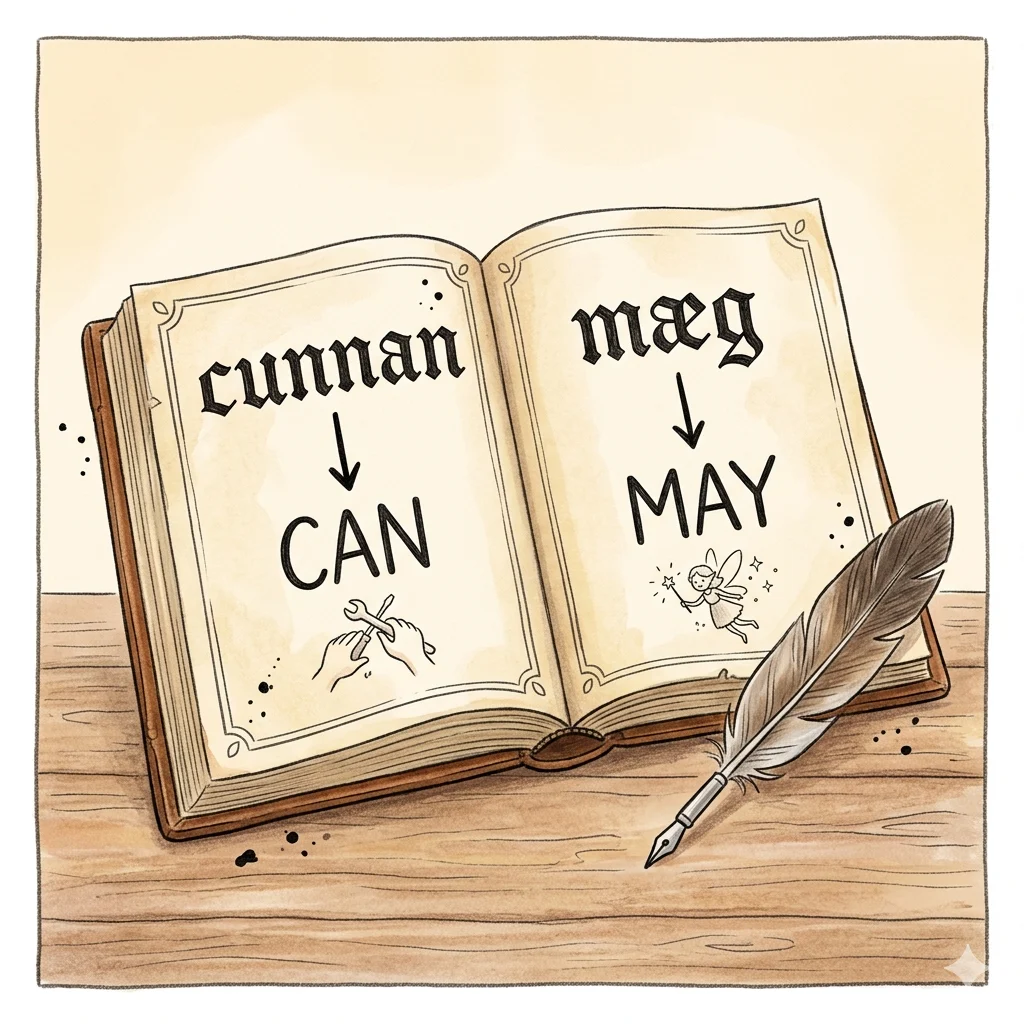
The words may and can come from old languages. Can comes from the Old English word cunnan. It meant “to know” or “to know how to.” Over time, it changed to mean “to be able.” So can is about power or skill.
May comes from the Old English word mæg. It meant “to have strength” or “to be allowed.” Over time, it kept the idea of permission. But it also became a polite way to ask things.
Why do people confuse may or can? Because in everyday speech, we use can for everything. A child says, “Can I have water?” The parent understands. But a strict teacher will say, “I don’t know. Can you? (Are you able to get water?) Or may you? (Is it allowed?)”
This joke is very old. It shows the difference. Over time, grammar experts tried to keep may only for permission. Buttypical people kept using can for both ability and permission. That is why the debate of may or can grammar is still alive today.
British English vs American English Spelling
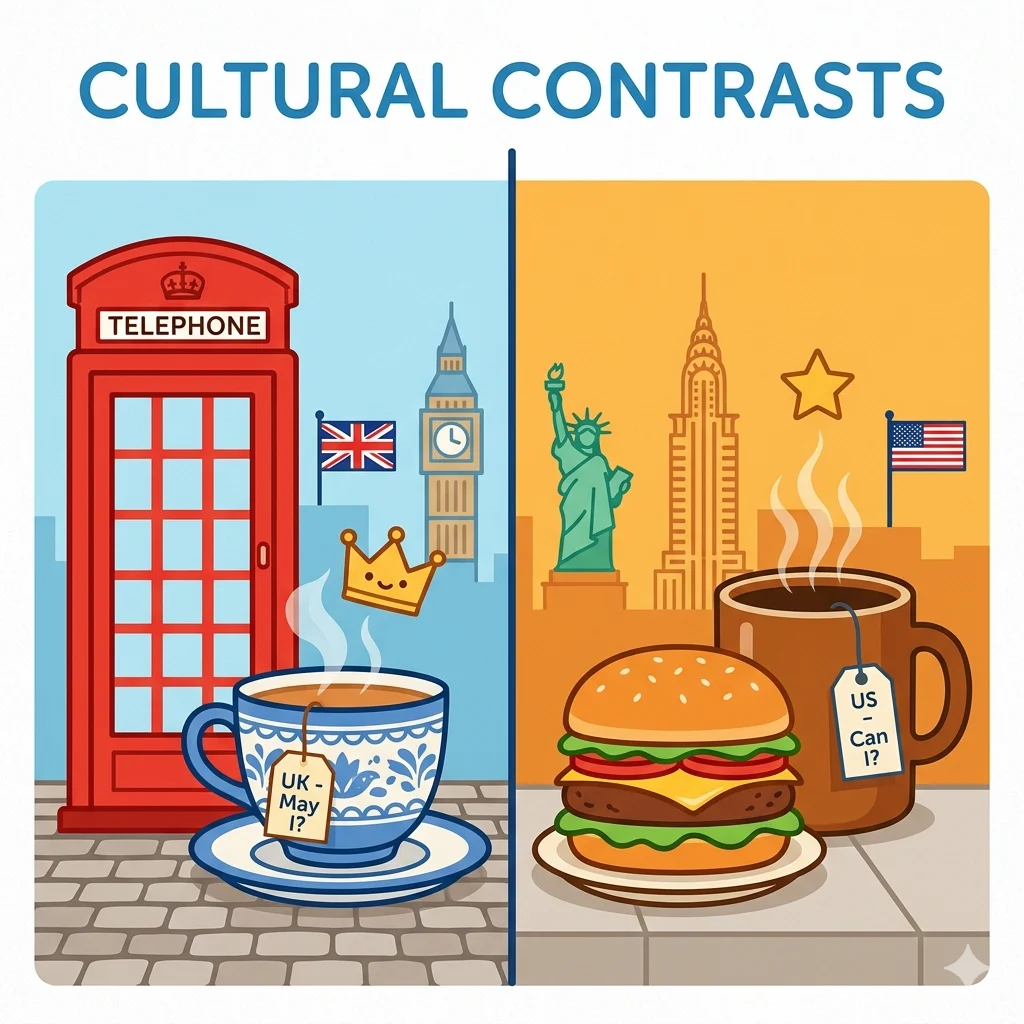
Here is good news. The spelling of may and can is the same in British and American English. There is no difference like color vs colour. Both countries spell may and can exactly the same way.
However, the usage is different.
- British English uses may more often in formal situations. For example, a British shop worker might say, “May I help you?” This sounds very proper.
- American English uses can more often. An American shop worker says, “Can I help you?” This sounds normal and friendly.
But both are understood in both countries. The rule of may or can for permission is taught in both places. But in real life, Americans use can for permission much more than British people.
Comparison Table: May vs Can in UK and US
| Situation | British English | American English |
|---|---|---|
| Asking for help | May I help you? (polite) | Can I help you? (standard) |
| Asking to enter | May I come in? | Can I come in? |
| Formal letter | You may send payment. | You may send payment. (same) |
| Casual talk | Can I borrow a pen? | Can I borrow a pen? (same) |
| Giving permission | You may leave now. | You can leave now. (more common) |
So the may or can difference is not about spelling. It is about formality and region. But both sides understand each other perfectly.
Which Spelling Should You Use?
Since spelling is the same, this question is really about which word to choose. Follow this simple advice based on who you are talking to.
For US audience (casual):
Use can most of the time. Say “Can I get a coffee?” or “Can I ask a question?” It feels natural. Only use may for very formal things like a court hearing or a wedding.
For UK / Commonwealth audience (formal leaning):
Use may in professional emails, with older people, or at work. Say “May I suggest an idea?” It shows respect. Use can with friends and family.
For global audience (business English):
Use may for written rules and official requests. Use can for spoken, friendly requests. If you are not sure, may is safer for formal writing. Can is safer for casual speech.
Special case: “May you”
Never use “May you” to ask a person to do something. It sounds odd. For example, do not say “May you close the door?” Instead say “Can you close the door?” (ability) or “Could you close the door?” (polite request). Many people search for may or can you. The correct answer is: Use can you or could you. Not “may you.”
Should I use could or may?
Could is even more polite than can but less direct than may. Use could for soft requests. Example: “Could I borrow your pen?” May is clearer for permission. “May I borrow your pen?” (I am asking for your okay.)
Common Mistakes with May or Can
Here are frequent errors people make with may or can and how to fix them.
Mistake 1: Using can for permission in formal writing.
- Wrong: “Can the student leave early?” (In a school policy document.)
- Right: “May the student leave early?” (Formal rule.)
Mistake 2: Using may for ability.
- Wrong: “I may run a mile fast.”
- Right: “I can run a mile fast.” (May means maybe. Can means ability.)
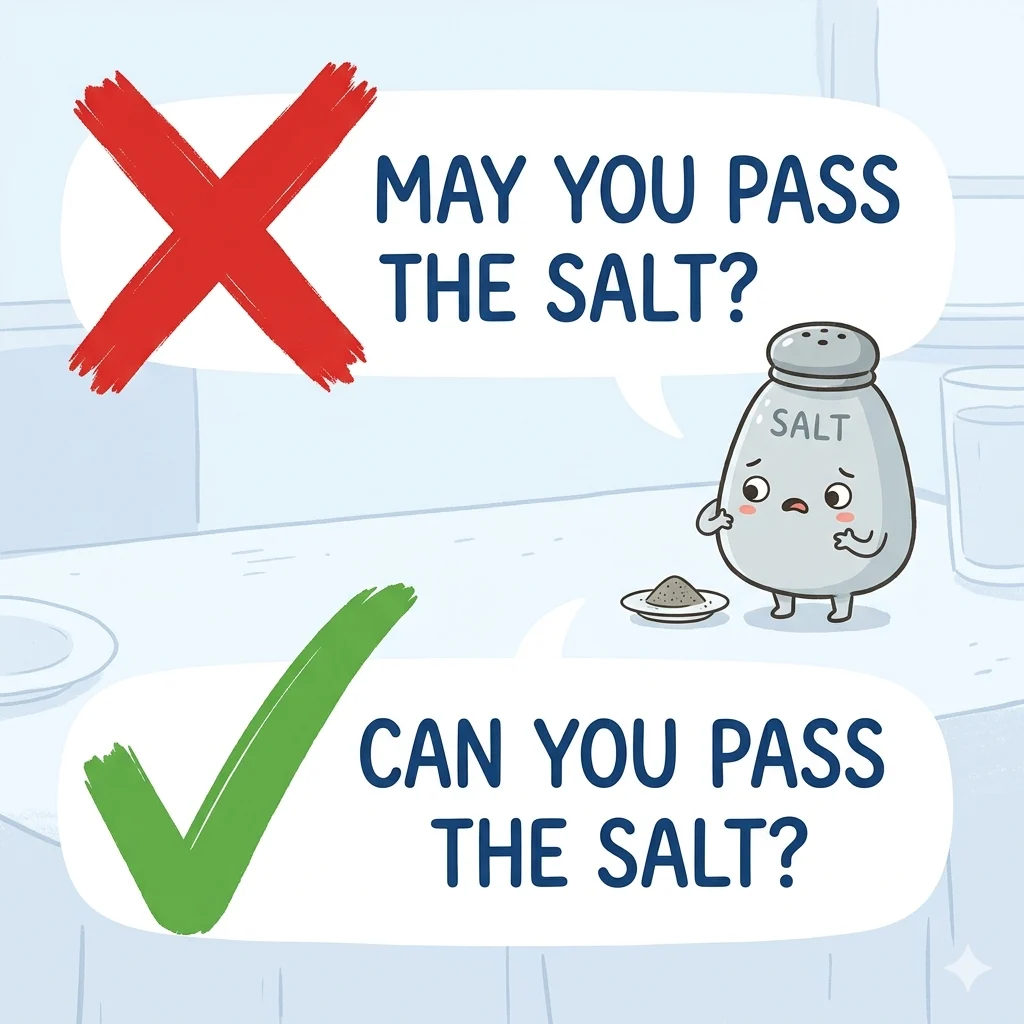
Mistake 3: Using “May you” as a question.
- Wrong: “May you pass the salt?”
- Right: “Can you pass the salt?” or “Could you pass the salt?”
Mistake 4: Answering “May I…?” with “Yes, you can.”
It is not a big error. But a grammar lover will notice. If someone asks “May I leave?” answer “Yes, you may.” to be perfect.
Mistake 5: Thinking may or can i go to the bathroom is only a joke.
It is a real question for English learners. The correct formal answer: “May I go to the bathroom?” (asking permission). “Can I go?” (asking about physical ability to walk there). So use may for the bathroom in formal places like school.
To fix these errors: Ask yourself: Is this about ability (can) or permission (may)? If you are making a request, may or could works. If you are stating a fact about power, use can.
May or Can in Everyday Examples
See how may or can works in real life. These may or can sentences show the difference.
Emails (Formal):
- “May I submit my report on Friday?” (Asking permission politely.)
- “You may find the attached file useful.” (Giving a soft suggestion.)
- “Can you send me the budget by 2 PM?” (Friendly, direct request.)
News Headlines:
- “You can now vote online.” (Ability or new feature.)
- “Residents may evacuate if the fire spreads.” (Permission or possibility.)
Social Media:
- “Can anyone recommend a good pizza place?” (Asking for ability to recommend.)
- “May I share your post on my story?” (Politely asking creator.)
Formal Writing (Work rules):
- “Employees may take a 30-minute lunch break.” (Permission given.)
- “No one can enter the lab without safety glasses.” (Ability blocked by rule.)
Classroom (Teacher to Student):
- Student: “Can I go to the bathroom?” (Casual, common but technically about ability.)
- Teacher: “Yes, you may.” (Teacher corrects gently to permission.)
Is may more polite than can?
Yes. Always. If you ask “May or Can I ask a sensitive question?” Use may. It shows social class and respect. For example, write to a client: “May I call you tomorrow?” Not “Can I call you?” The may version is softer.
What about may or can which is more polite?
May is the most polite. Then could. Then can (least formal). So choose may for strangers, bosses, and older people.
May or Can – Google Trends & Usage Data
Looking at search data, people are still confused. Searches for difference between may and can with examples are high in the US, UK, India, and Australia.
Popularity by country:
- United States: Searches for “can I or may I” spike in back-to-school season (August and September). Parents help kids with grammar.
- United Kingdom: Searches for “may or can grammar” are steady all year. British people care about formality.
- India: High searches for “may or can exercises” and “may or can worksheet” because English is taught as a second language with strict rules.
Context of use:
- Formal documents (policies, legal forms): May is used 9 out of 10 times.
- Everyday speech (America): Can is used 8 out of 10 times for permission.
- Business emails (global): May is used for first contact. Can for co-workers.
Future trend: Informal use of can for permission is growing. Even the Oxford English Dictionary says can is accepted for permission in casual English. But for high-stakes writing (college essays, job applications), stick with may for permission. May or can usage is slowly merging, but careful writers still keep them separate.
Comparison Table: May vs Can Features
| Feature | May | Can |
|---|---|---|
| Main meaning | Permission, possibility | Ability, skill |
| Formality level | High (polite) | Low to medium |
| Used for requests | Yes (formal) | Yes (casual) |
| Used for ability | No (wrong) | Yes (correct) |
| Question form | May I…? | Can I…? |
| Negative form | May not | Cannot / can’t |
| Past tense | Might | Could |
| Best for | School, work, official | Friends, family, quick talk |
FAQs: May or Can
1. Is it May or Can I ask a question?
Both are correct but different. “May I ask” is polite and formal. “Can I ask” is casual and friendly. For a boss or stranger, use “May I ask.”
2. When do you use may or can in a question?
Use can to ask about ability: “Can you hear me?” Use may to ask for permission: “May I sit here?” If the answer is “yes” or “no” based on a rule, use may.
3. What is the difference between may and can with examples?
- May (permission): “May I borrow your car?” Answer depends on owner’s permission.
- Can (ability): “Can you drive a manual car?” Answer depends on your skill.
So may or can difference is permission vs ability.
4. Should I use may or can for the bathroom?
In formal places (school, court, office), say “May I go to the bathroom?” In a friend’s house, say “Can I use your bathroom?” Both work. But may is 100% correct for permission.
5. May or can which is more polite for a request?
May is more polite. For example, “May I have another napkin?” vs “Can I have another napkin?” The first shows better manners. Use may in nice restaurants or when you meet your partner’s parents.
6. What is a good may or can worksheet exercise?
Try this: Write 5 sentences asking for things at school. Use may for two. Use can for three. Then switch. Example: “May I go to the library?” “Can I turn in homework late?” This helps you feel the difference.
7. What about may or can grammar for “help you”?
“May I help you?” (polite, used in stores). “Can I help you?” (friendly, used between co-workers). Both are fine. But may is standard for customer service.
8. Is there a difference between may or can meaning?
Yes. May includes a small chance of “no” (permission denied). Can is about power. So “You may not enter” means it is forbidden. “You cannot enter” means you lack the ability (door is locked or you are too big). That is the fine line.
Conclusion
You now understand may or can completely. Remember the core rule: Can for ability. May for permission. But real life is flexible. In casual talk, can is fine for permission. In formal writing, use may to be safe and polite. The may or can difference is small but important for sounding professional. Teachers and bosses notice the difference. If you ask “May or can I go to the bathroom” in a meeting, use may. It shows respect. For everyday emails with people you know, can is faster and friendly. The most important thing is to be clear. Do not worry too much. Native speakers mix them all the time. But now you know the secret: Is may more polite than can? Yes. So when in doubt, choose may for formal, could for soft, and can for casual. You have the tools. Go use them well.

“Machin Smith writes faith-driven reflections for Praydrop, offering readers clarity, hope, and spiritual wisdom for a grounded, meaningful life.”