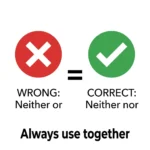
Goes” is the correct spelling, while “gos” is incorrect in standard English. Use “goes” with singular subjects such as he, she, or it.
If you’ve ever wondered whether to write goes or gos, you’re not alone. This is one of the most common spelling and grammar mistakes in English because many learners are unsure what happens when a verb ends in -o. The good news is that the rule is simple once you understand it.
The correct form is goes. For example, we say, “She goes to school every day,” “He goes to the gym after work,” and “The train goes through the tunnel.” In each sentence, goes matches a singular subject and follows standard English grammar rules. The spelling gos is incorrect and should not be used in formal or informal writing.
A single missing letter may seem like a small mistake, but it can make a sentence look incorrect and affect the clarity of your writing. That is why understanding the difference between goes or gos is important for students, writers, professionals, and English learners alike.
This guide explains the correct spelling, grammar rule, real-life examples, common mistakes, and easy tips to help you remember the difference confidently. By the end, you’ll know exactly when to use goes and why gos is never the right choice.
Gos or Goes meanings
The correct word is goes. The word gos is wrong. You should never use gos in modern English. Goes is the third-person singular form of the verb go. Use it with he, she, or it.
Examples:
- Correct: She goes to work every day.
- Wrong: She gos to work every day.
- Correct: The bus goes downtown.
- Wrong: The bus gos downtown.
Think of goes as the special form for one person or one thing doing the action now. If you ask is it gos or goes, the answer is always goes for present tense sentences.
The Origin of Gos or Goes
The confusion between gos or goes starts with history. The verb go is very old. It comes from Old English gān. Over 1,500 years, its forms changed. The third-person form became gǣþ. This later turned into goeth in Middle English. Then, it became goes in Early Modern English.
Why not gos? English likes to add *-es* to verbs ending in *o*, *s*, sh, ch, or *x*. Go ends with a long *o* sound. So we add *-es* to keep the sound smooth. Saying gos feels hard on the tongue. Goes flows better. The spelling difference is not a new mistake. Even 400 years ago, writers knew goes was right. But children and new learners often write gos by mistake. This is because they add a simple *-s* to the base verb. That rule works for walk (walks) but not for go. So gos or goes meaning is clear: goes means action by one other person or thing. Gos has no real meaning because it is not a word.
British English vs American English Spelling
Good news: There is no difference here. Both British and American English use goes. This is one of the rare grammar rules where both sides agree. The verb go conjugates the same way in London and New York. However, other words ending in *o* follow the same pattern. Let us compare.
Examples in both dialects:
- British: He goes to the cinema.
- American: He goes to the movies.
- British: She goes to hospital.
- American: She goes to the hospital.
Comparison Table: Verb Endings in US vs UK English
| Base Verb | US English (3rd person) | UK English (3rd person) | Rule |
|---|---|---|---|
| Go | Goes | Goes | Add -es |
| Do | Does | Does | Add -es |
| Catch | Catches | Catches | Add -es |
| Watch | Watches | Watches | Add -es |
| Mix | Mixes | Mixes | Add -es |
As you see, no difference. So gos or goes grammar is the same everywhere. If you see gos in a book, it is a typo. If you hear it, the speaker is making a common error.

Which Spelling Should You Use?
You should always use goes. There is no choice. But let me give audience-based advice.
- For US audiences (students, workers, writers): Use goes. Never gos. If you write gos in an email or report, people will think you made a basic error.
- For UK/Commonwealth audiences: Same rule. Goes is the only correct form. Schools in the UK mark gos as wrong.
- For global audiences (non-native speakers): Learn goes as a fixed rule. Do not try to guess. Many learners ask how do i spell gos? You spell it G-O-E-S. That is goes.
- For informal writing (texts, chats): Still use goes. Gos looks strange. Your friends may not correct you, but it is still a mistake.
- For professional or academic writing: Always goes. Editors check for this error. It is a small word but a big signal of your skill.
If you search plural of goes, note that goes is not a noun. It is a verb form. Verbs do not have plurals. Only nouns do. So do not ask for the plural. Ask for the correct third-person singular.
Common Mistakes with Gos or Goes
People make many errors with this word. Here are the most frequent mistakes and how to fix them.
- Using gos with he/she/it
- Wrong: He gos home early.
- Right: He goes home early.
- Using goes with I/you/we/they
- Wrong: I goes to the park.
- Right: I go to the park.
- Forgetting the *-es* after go
- Wrong: The dog go outside.
- Right: The dog goes outside.
- Using gos in questions
- Wrong: Does she gos there?
- Right: Does she go there? (After does, use base verb go)
- Spelling goes as go’s
- Wrong: He go’s to school. (The apostrophe is for possession or contraction, not for verbs)
- Right: He goes to school.
Quick test for you: Which is correct? “Maria always (gos/goes) to the gym.” The answer is goes. If you need practice, find a gos or goes worksheet online. Or take a gos or goes quiz to test yourself. Many teachers give gos or goes sentences as homework. Write ten sentences with he goes, she goes, and it goes. Then check your work.

Gos or Goes in Everyday Examples
Let us see gos or goes in real life. These examples come from emails, news, social media, and formal writing.
Emails (professional):
- “Please confirm that the report goes to the client by Friday.”
- “She goes above and beyond for every project.”
News headlines:
- “Stock market goes up after jobs report.”
- “Senator goes on record with new statement.”
Social media (casual):
- “My cat goes out of control, for treats. #catlife”
- “He goes to the same coffee shop every day.”
Formal writing (academic or legal):
- “The data shows that the trend goes back twenty years.”
- “If the defendant goes against the order, he faces fines.”
Everyday conversation:
- “Where goes the bus from here?”
- “Whatever goes on, stay calm.”
Notice: No gos anywhere. The word goes meaning is simple: it shows an action by one other person or thing in the present. Remember, how do i say goes? Say it like “goze” with a *z* sound at the end. Not “go-ss”.

Gos or Goes – Google Trends & Usage Data
When you look at Google data, gos or goes shows a clear picture. The word goes is millions of times more common. Gos appears only in misspellings. Most searches for “gos” are people asking is it gos or goes. Here is what the data tells us.
- By country: English-speaking countries (US, UK, Canada, Australia) search for goes almost 100% of the time. Gos gets zero traction. Non-native countries see more searches for “gos vs goes” because learners are unsure.
- By context: Goes is used everywhere – news, blogs, books, and scripts. Gos appears only in user-generated content like YouTube comments or Reddit posts. And even there, it is corrected quickly.
- By time: Over the last 20 years, goes has stayed stable. Gos has never risen. This tells us the rule is not changing. English is not evolving to accept gos.
Comparison Table: Gos vs Goes
| Feature | Gos | Goes |
|---|---|---|
| Correct in standard English | No | Yes |
| Used in dictionaries | No | Yes |
| Appears in news media | No | Yes |
| Acceptable in schools | No | Yes |
| Used by native speakers | Rare (as a typo) | Always |
| Works with he/she/it | No | Yes |
If you check what is v1 v2 v3 v4 of go, here it is:
- V1 (base): go
- V2 (past): went
- V3 (past participle): gone
- V4 (present participle): going
- V5 (3rd person singular): goes
So goes is the V5 form. Gos is not in any verb table.
(FAQs)
1. Is it gos or goes for a single person?
It is goes. Example: “Tom goes to work.” Never use gos for a single person.
2. What is the difference between gos and goes?
The difference is that goes is correct. Gos is a spelling error. No difference in meaning because gos has no meaning.
3. How do I spell gos?
You do not spell gos because it is wrong. To spell the correct word, write G-O-E-S for goes.
4. What is v1, v2, v3, v4 of go?
V1 = go, V2 = went, V3 = gone, V4 = going. The fifth form (V5) is goes.
5. How do I say “goes”?
Say it like “goze.” It rhymes with toes and rose. Use a *z* sound at the end.
6. Gos or goes meaning – which one has a definition?
Only goes has a definition. It means to move from one place to another or to do an activity. Example: “She goes swimming.”
7. What is the plural of goes?
Verbs do not have plurals. Only nouns have plurals. So goes stays goes for all third-person singular subjects.
8. Can I use gos in text messages?
You can, but it is wrong. Your friends will understand you, but it looks like a child’s mistake.
9. Does gos or goes grammar change in questions?
No. In questions with does, you use the base form go. Example: “Does she go home?” Not “Does she goes.” But for statements: “She goes home.”
10. Where can I find a gos or goes quiz?
Search online for “third person singular verbs quiz.” Many ESL websites offer free gos or goes worksheet downloads.
Conclusion
You now know the full truth about gos or goes. Only one word is correct: goes. The other is a simple spelling mistake. Always use goes with he, she, or it in the present tense. Remember the rule: verbs ending in *o* add *-es*. This makes go into goes. Never use gos in emails, homework, news, or social media.
It is a sign of low English skill. If you are learning English, practice making sentences. Write down ten examples like “The train goes fast” and “He goes to bed late.” Check your work. Over time, goes will feel natural. If you still feel unsure, take a gos or goes quiz. Use a gos or goes worksheet from a trusted site. Drill the sentences until the error disappears. Your writing will look professional. Your speaking will sound clear. And you will never again ask is it gos or goes. You will know the answer.

“Charles Williams writes uplifting spiritual insights for Praydrop, inspiring readers with faith, hope, and guidance for a more peaceful, meaningful life.”