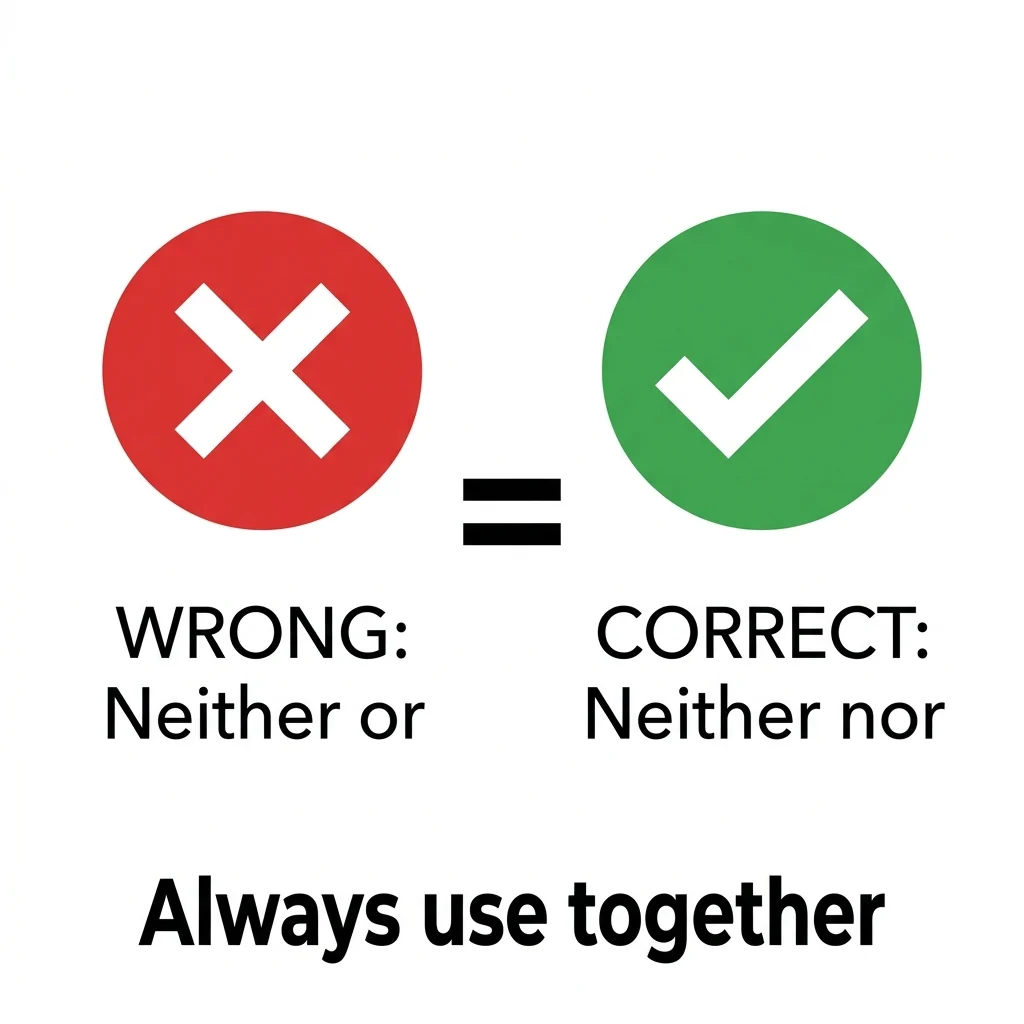
Neither and Nor are paired conjunctions used to connect two or more negative choices, showing that none of the options are true, available, or selected.
Confused about when to use neither and nor? You’re not alone. These two words are among the most commonly misunderstood parts of English grammar, yet they appear frequently in conversations, essays, emails, exams, and professional writing. A small mistake in their usage can make a sentence sound awkward or grammatically incorrect.
The good news is that neither…nor follows a simple pattern once you understand how it works. Instead of expressing two separate negative ideas, this pair combines them into one clear and balanced statement. As a result, your writing becomes more concise, natural, and effective.
Whether you’re a student trying to improve your grammar, a writer aiming for polished sentences, or an English learner looking to avoid common mistakes, mastering neither and nor can instantly strengthen your communication skills. Understanding when to use them, how they affect sentence structure, and which verb forms they require will help you write with greater accuracy and confidence.
In this guide, you’ll learn the meaning of neither and nor, the essential grammar rules behind their usage, practical examples, common errors to avoid, and simple tips that make these tricky words easy to understand and use correctly.
Neither or Nor meanings
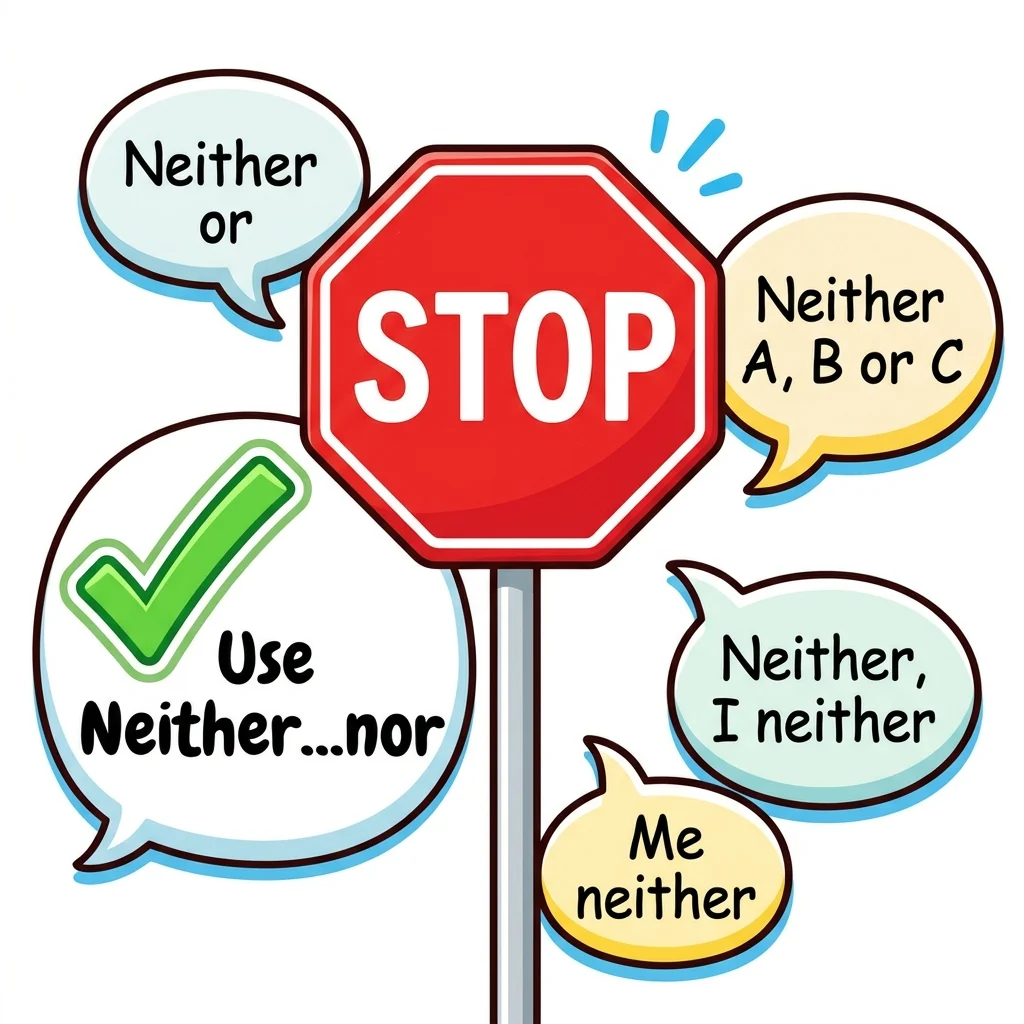
Use neither or nor together. They are a pair. Do not break them apart.
- Use neither before the first negative choice.
- Use nor before the second negative choice.
Correct: Neither the manager nor the staff agreed.
Wrong: Neither the manager or the staff agreed.
Think of it like salt and pepper. You use both. The same rule works for when to use neither or nor in any sentence.
The Origin of Neither or Nor
The words come from Old English. “Neither” came from “nāhwæþer.” That meant “not either of two.” “Nor” came from “nōther.” Over time, spellings changed. But the rule stayed the same. For over 1,000 years, English writers have paired neither or nor together. That is why the rule is strong today.
British English vs American English Spelling
Good news. The spelling of neither or nor is the same in both British and American English. There is no difference. But the way people use these words is different.
| Feature | British English | American English |
|---|---|---|
| Spelling | Neither / Nor | Neither / Nor |
| How often used | Very often | Less often |
| In speech | Common and natural | Sounds a bit formal |
| Alternative | None needed | “Not…either” is common |
British way: Neither the rain nor the wind stopped the game.
American way: The rain didn’t stop the game, and the wind didn’t either.
Even with this difference, learning neither or nor grammar rules helps you in both countries.
Which Spelling Should You Use?
There is no choice. Neither is always N-E-I-T-H-E-R. Nor is always N-O-R. But you do have a choice about when to use neither or nor based on your audience.
- For students taking tests (IELTS, TOEFL, SAT): Always use neither or nor. Tests check for this rule.
- For US business writing: Use neither or nor in reports and formal emails.
- For UK and Australian writing: Use neither or nor in all writing. It is standard.
- For casual texting: You can say “me neither” or “not…either.” But knowing the rule is still good.
What is the meaning of neither or nor? It means “not the first one and not the second one.” Simple.
Common Mistakes with Neither or Nor
Here are the most frequent errors people make with neither or nor grammar. Learn these to stay correct.
Mistake 1: Using “or” instead of “nor”
Wrong: Neither the apple or the orange is fresh.
Right: Neither the apple nor the orange is fresh.
Mistake 2: Wrong verb agreement
Wrong: Neither the boy nor his friends is coming.
Right: Neither the boy nor his friends are coming.
The verb agrees with the noun closest to it. “Friends” is plural, so use “are.”
Mistake 3: Using “neither” for three or more items
Wrong: Neither the cat, the dog, nor the bird is home.
Right: None of the three pets is home.
Use neither or nor only for two things.
Mistake 4: Forgetting the pair
Wrong: She likes neither pizza. She likes pasta either.
Right: She likes neither pizza nor pasta.
Mistake 5: Answering “Me neither” incorrectly
This is actually fine in casual English. But in formal English, say “Neither do I.”
Question: I don’t like loud music.
Casual answer: Me neither.
Formal answer: Neither do I.
Understanding use of neither or nor helps you choose the right answer every time.
Neither or Nor in Everyday Examples
Let us see how to use neither or nor in real life. Here are examples from different places.
In Professional Emails
Dear Client, Neither the morning slot nor the afternoon slot is available on Friday. Please choose another day.
In News Headlines
Neither the President nor the Vice President attended the summit.
On Social Media
Neither my sleep schedule nor my diet is ready.
In Formal Academic Writing
The experiment showed that neither the control group nor the treatment group responded to the drug.
In Daily Conversation
“Do you want coffee or tea?” “Neither. Just water please.”

50 Sentences of Neither Nor with Answers
Here are 50 sentences of neither nor with answers. Read them to see the pattern.
- Neither John nor Mary is late.
- Neither the red pen nor the blue pen works.
- Neither my father nor my mother likes spicy food.
- Neither the car nor the bike is fast.
- Neither the teacher nor the students were happy.
- Neither rain nor snow stops the postman.
- Neither the book nor the movie was good.
- Neither my brother nor my sister has a job.
- Neither the chicken nor the fish is fresh.
- Neither the phone nor the charger is working.
- Neither Monday nor Tuesday works for me.
- Neither the manager nor the staff knew the answer.
- Neither the coffee nor the tea is hot.
- Neither the dog nor the cat is inside.
- Neither the price nor the quality is good.
- Neither the summer nor the spring is too hot here.
- Neither the boy nor the girl was wrong.
- Neither the bus nor the train arrives on time.
- Neither the apple nor the banana is ripe.
- Neither the shirt nor the pants fit me.
- Neither the music nor the noise bothers me.
- Neither the door nor the window was locked.
- Neither the salt nor the pepper is on the table.
- Neither the pen nor the paper is useful.
- Neither the hotel nor the food was expensive.
- Neither the job nor the salary is attractive.
- Neither the movie nor the popcorn was cheap.
- Neither the shoes nor the socks are clean.
- Neither the milk nor the juice is cold.
- Neither the bag nor the wallet was found.
- Neither the answer nor the explanation is correct.
- Neither the map nor the GPS works here.
- Neither the song nor the video is popular.
- Neither the gift nor the card arrived.
- Neither the floor nor the wall is clean.
- Neither the laptop nor the tablet turns on.
- Neither the soup nor the salad is tasty.
- Neither the gym nor the pool is open.
- Neither the email nor the text message was received.
- Neither the doctor nor the nurse was available.
- Neither the train nor the plane is on time.
- Neither the interview nor the test was hard.
- Neither the breakfast nor the lunch is included.
- Neither the winter nor the fall is rainy here.
- Neither the key nor the lock is new.
- Neither the song nor the lyrics make sense.
- Neither the paint nor the brush is expensive.
- Neither the bread nor the butter is fresh.
- Neither the joke nor the reaction was funny.
- Neither the plan nor the backup worked.
Now you have 50 sentences of neither nor with answers to study.

Neither or Nor – Google Trends & Usage Data
People search for neither or nor most often in India, Nigeria, and the Philippines. These are countries where English is learned as a second language. Students search for neither nor examples before exams.
In the United States, searches go up in January and September. That is when students return to school. In the United Kingdom, searches stay steady all year. On Twitter and LinkedIn, professionals use neither or nor to sound smart and clear.
What is the meaning of neither or nor? It has not changed in 200 years. It always means “not one and not the other of two things.”
Comparison Table: Neither/Nor vs Other Grammar Pairs
| Grammar Pair | Meaning | Example Sentence |
|---|---|---|
| Neither…nor | Not one and not the other | Neither Tom nor Jerry won the race. |
| Either…or | One or the other (a choice) | Either Tom or Jerry will win. |
| Both…and | Two things together | Both Tom and Jerry are funny. |
| Not…either | Same meaning but weaker | Tom is not fast. Jerry is not fast either. |
Understanding either or neither or nor helps you choose the right pair for your sentence.
Neither or Nor Exercises with Answers
Here are neither or nor exercises to test yourself.
Exercise 1: Fill in the blank with “neither” or “nor”
- __________ the cat __________ the dog is home.
- She likes __________ coffee __________ tea.
- __________ John __________ his brother speaks French.
- The movie was __________ funny __________ interesting.
- __________ the red shirt __________ the blue shirt fits me.
Answers:
- Neither, nor
- neither, nor
- Neither, nor
- neither, nor
- Neither, nor
Exercise 2: Fix the wrong sentences
- Neither the teacher or the students were ready.
- Neither the boy nor his sisters is late.
- Neither the apple, the banana, nor the orange is fresh.
- She likes neither pizza.
- Neither am I correct?
Answers:
- Neither the teacher nor the students were ready.
- Neither the boy nor his sisters are late.
- None of the three fruits is fresh. (or use two items only)
- She likes neither pizza nor pasta.
- Neither am I correct. (Statement, not question)
These neither or nor exercises will make you confident.
Neither Nor Questions for Practice
Here are common neither nor questions that students ask:
Question 1: Do I always need both words?
Answer: Yes. Use neither or nor together.
Question 2: Can I use “neither” alone?
Answer: Yes, if you mean “not either one.” Example: “Which one do you want?” “Neither.”
Question 3: Is “neither or nor” formal?
Answer: Yes. It is correct for both formal and casual English.
Question 4: What about “not neither or nor”?
Answer: Never use “not” before “neither.” That is a double negative. Wrong: I don’t want neither. Right: I want neither.
Question 5: Is “neither am I correct”?
Answer: Yes, as a short response. Person A: I am not ready. Person B: Neither am I.
Question 6: How to use neither or nor in a sentence with two verbs?
Answer: Neither did she call nor did she text. (Repeat the helper verb)
Question 7: What is an example of either or neither nor in one sentence?
Answer: Either you pay the bill, or I will. Neither the bill nor the tip was paid.
Question 8: What is the neither or nor meaning in telugu?
Answer: “ఇది కాదు, అది కాదు” (Idi kadu, adi kadu) – meaning “not this, not that.”
Question 9: Neither or nor kurt has turned in – is this correct?
Answer: No. The correct sentence is: Neither Kurt nor his partner has turned in the report.
Question 10: When to use neither or nor with “I”?
Answer: Neither you nor I am responsible. (Verb “am” agrees with “I”)
Conclusion
You now know everything about neither or nor. Use them as a pair. Use them for two things only. Make the verb agree with the second noun. Do not use “not” before “neither.” Practice with 50 sentences of neither nor with answers. Try the neither or nor exercises. Answer the neither nor questions. Now you know when to use neither or nor in any situation. Write with confidence. Speak with clarity.

“Shena Mackay offers gentle, faith-centered reflections on Praydrop, inspiring readers with hopeful guidance, spiritual clarity, and heartfelt wisdom.”