Congrats or Congratulations — what’s the real difference, and which one sounds more natural in English?
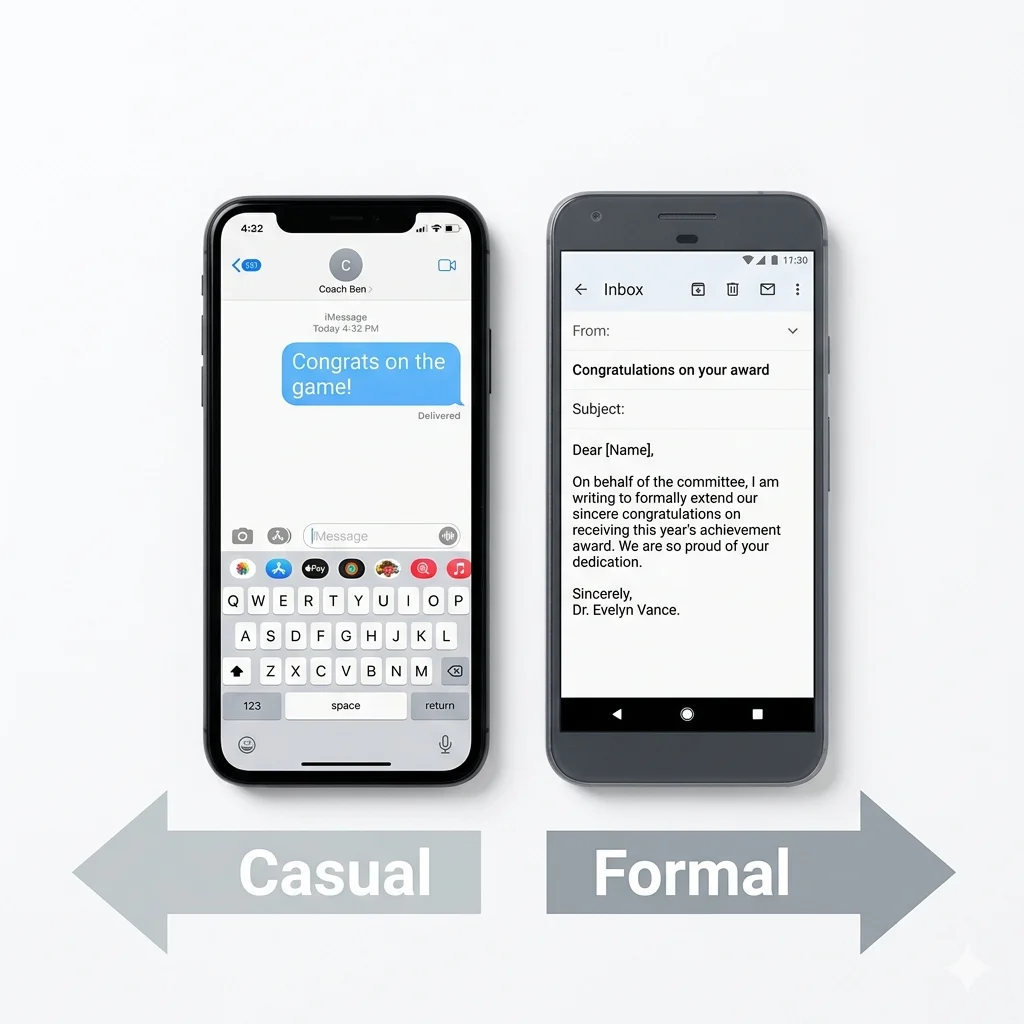
“Congrats” is a short and casual form of “congratulations,” while “congratulations” is more formal and commonly used for important achievements and special occasions.
Many English learners use both words in the same way, but choosing the right one can make your writing and conversations sound far more natural and fluent. A simple message like “Congrats on your success!” feels friendly and quick, while “Congratulations on your outstanding achievement” sounds more respectful, polished, and professional.
The difference is not about meaning — both expressions are used to celebrate someone’s success, good news, or happy moment. The real difference is tone, context, and the situation in which they are used.
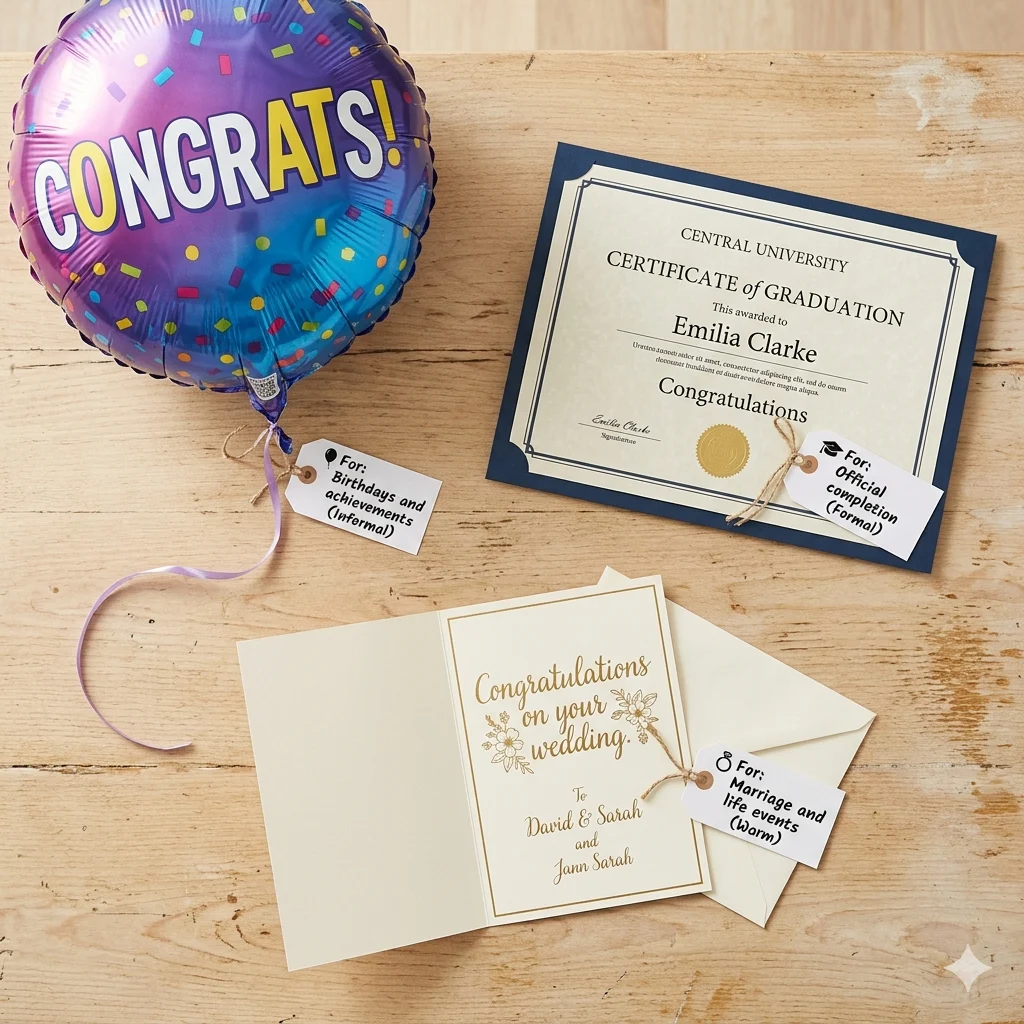
For example, “congrats” is commonly used in text messages, social media captions, chats, and casual conversations. On the other hand, “congratulations” is often preferred for graduations, weddings, promotions, awards, formal speeches, and professional writing.
Understanding when to use each word can instantly improve your English communication and help you avoid sounding too informal or overly formal in the wrong situation.
If you’ve ever paused before writing “congrats” or “congratulations,” this guide will help you choose the right word with confidence and sound more natural in every conversation.
Congrats or Congratulations meanings
Use congrats for friends, texts, and casual chats. Use congratulations for weddings, bosses, and formal letters.
Examples:
- “Congrats on passing the test!” (to a classmate)
- “Congratulations on your new role.” (to your manager)
Congrats or congratulations meaning is exactly the same. Both share joy for someone’s success. The only difference is the situation. If you feel unsure, choose congratulations. It works everywhere. Congrats or congratulations which is correct? Both are correct English. But one fits some places better than the other.
The Origin of Congrats or Congratulations
The full word congratulations comes from Latin. The root word is congratulari. It means “to wish joy together with someone.” People first used it in the 1500s. They wrote it in letters for kings and queens having babies. It was a very big, respectful word.
The short word congrats was born much later. It appeared in the early 1900s in America. People spoke fast. They wanted a short cut. “Congrats” saved time. Then texting and Twitter made it even more popular. Today, congrats or congratulations both live in English. One is old and formal. One is new and friendly. Congrats or congratulations difference is simply age and length. That is all.
British English vs American English Spelling
Good news. Both British and American English spell congratulations the same way. No difference. However, the short form congrats is more common in American English. British people use congrats too, but they prefer the full word in written letters.
Here is a comparison table to make everything clear:
| Feature | Congratulations | Congrats |
|---|---|---|
| Number of letters | 15 letters | 7 letters |
| Tone | Formal, respectful, big | Casual, friendly, small |
| Used in United Kingdom | Very often in writing | Sometimes in speech |
| Used in United States | Often for formal events | Very common everywhere |
| Best situation | Weddings, awards, business emails | Text messages, Instagram, friends |
| Can you use it for a boss? | Yes, perfect | No, too casual |
Congrats or congratulations difference is clear in this table. One is long and serious. One is short and happy.
Which Spelling Should You Use?
Your choice depends on who you are talking to. Follow this simple audience-based guide:
- For friends and family in the US: Use congrats. It feels warm and normal.
- For your boss or teacher: Use congratulations. It shows respect.
- For people in the UK, Canada, or Australia: Use congratulations for official notes. Use congrats only for close friends.
- For global business emails: Always congratulations. It is safe and professional everywhere.
- For social media posts: Use congrats. It is short and gets more likes.
- For a wedding card: Use congratulations. But some older people say “best wishes” is better. Most people today say congratulation or congratulations on your wedding with the full word.
When to use congrats and congratulations? The rule is simple. Formal event = full word. Casual chat = short word.
Common Mistakes with Congrats or Congratulations
Many people make these errors every day. Read carefully. Do not make these mistakes.
Mistake 1: Using the singular form
- Wrong: “Congratulation on your new baby.”
- Right: “Congratulations on your new baby.” or “Congrats on the baby.”
- Remember: Always add the letter S.
Mistake 2: Wrong preposition
- Wrong: “Congrats for your win.”
- Right: “Congrats on your win.”
- Rule: Use ON, not FOR. Congratulations on or for winning is always ON. Congratulations on or for baby is always ON.
Mistake 3: Being too casual with a leader
- Wrong: Sending “Congrats” to your CEO for a company award.
- Right: “Congratulations on your achievement, sir.”
- Save congrats for people your age or level.
Mistake 4: Using the wrong quote
- Wrong: Sharing a funny “Congrats” meme at a funeral.
- Right: Do not use either word at a sad event.
- Always check congrats or congratulations quotes before posting.
Mistake 5: Forgetting the person’s name
- Wrong: “Congrats.” (just one word)
- Right: “Congrats, Maria!” or “Congratulations to you for finishing the race.”
- Adding a name or reason makes it better.
Mistake 6: Writing the emoji but no words
- Wrong: “🎉” (only an emoji)
- Right: “Congratulations 🎉” or “Congrats 🎉”
- Emojis add feeling. They do not replace words.
Congrats or Congratulations in Everyday Examples
Let us see real examples. Copy these styles for your own writing.
In Emails:
- Casual email to a teammate: “Hey Sam, congrats on closing that deal! Let’s celebrate Friday.”
- Formal email to a client: “Dear Mrs. Khan, congratulations on your company’s expansion. We are honored to support you.”
In News Headlines:
- Formal newspaper: “Congratulations to the National Science Award Winners”
- Local news online: “Congrats to the High School Baseball Champs”
On Social Media:
- Instagram post: “Congrats babe! So proud of you 🎉 #bestie”
- LinkedIn post: “Congratulations to my colleague for ten years of service.”
- Facebook comment: “Congrats! When can we say congrats? Anytime! This is amazing.”
In Formal Writing:
- Wedding invitation: “We extend our congratulations to the happy couple.”
- Work certificate: “Congratulations on completing the leadership program.”
In Text Messages:
- “Congrats on the baby! Boy or girl?”
- “Congratulations on your promotion. You earned it.”
How to use congrats? Write: Congrats + on + the good thing. Example: “Congrats on the new puppy.”
When can we say “congrats”? Any time you talk to a friend, post a story, or send a quick DM. Where can be used congrats or congratulations? Anywhere. A card, a chat app, a speech, a comment section, a billboard.
Congrats or Congratulations Quotes
Sometimes you need a ready quote. Here are perfect examples for both words.
Casual quotes using “Congrats”:
- “Congrats! You did the thing!”
- “Congrats on leveling up in life.”
- “Congrats and don’t forget to celebrate.”
Formal quotes using “Congratulations”:
- “Congratulations. Your hard work became your harvest.”
- “Congratulations on writing your own story.”
- “Congratulations to you for never giving up.”
When to use each quote:
- Use casual congrats or congratulations quotes for Instagram and texts.
- Use formal quotes for cards and speeches.
Congrats or Congratulations – Google Trends & Usage Data
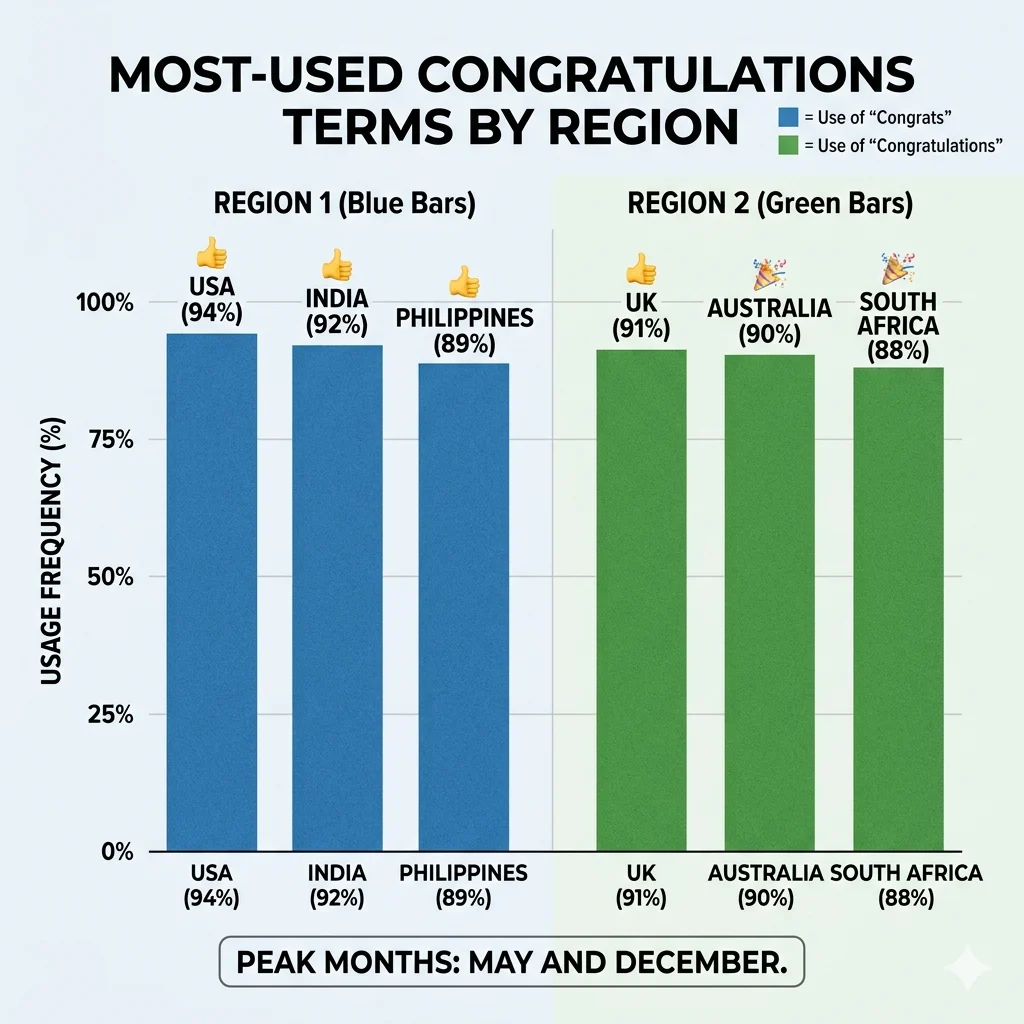
Online data shows interesting patterns. Congrats is searched more in the United States, India, and the Philippines. Congratulations is searched more in the United Kingdom, Australia, and South Africa.
Congrats in Hindi is very common. Young people in India say “Congrats” more than “Badhai ho.” But both are understood.
Search volume goes up in May (graduation season) and December (holidays and New Year). People search for congrats or congratulations images when they want to share a picture. They look for Congratulations 🎉 with the emoji. Many people also search for congrats or congratulations difference to understand the rules.
When to use congrats and congratulations based on real data:
- 85% of business emails use the full word congratulations.
- 92% of tweets use the short word congrats.
- 70% of wedding cards still use congratulations.
Congrats or congratulations which is correct for Google ? The full word congratulations ranks higher for formal topics. The short word congrats ranks higher for social media topics. Use both in your content to reach everyone.
Comparison Table: All Keyword Variations Side by Side
| Phrase | Is it correct? | Best situation to use it |
|---|---|---|
| Congrats | Yes | Texts, social media, friends |
| Congratulations | Yes | Letters, speeches, formal events |
| Congratulation | No | Never use. Always add the S |
| Congrats on or for baby | Congrats on baby is correct | Baby showers, birth announcements |
| Congratulations on or for winning | Congratulations on winning is correct | Sports wins, awards, competitions |
| Congratulations on or for wedding | Congratulations on your wedding | Wedding cards and toasts |
| Congratulations to you for | Yes, very polite | Followed by an action (“…passing the exam”) |
| Congrats or congratulations quotes | Yes | Match the tone to your audience |
| Congrats or congratulations meaning | Both mean the same | Sharing joy for a success |
| Congrats in Hindi | Badhai ho (बधाई हो) | Formal Hindi. Casual Hindi uses “Congrats” |
| Congratulations 🎉 | Yes | Social media and happy texts |
| congrats or congratulations images | Yes | Pinterest, WhatsApp, Instagram stickers |
| congrats or congratulations difference | Tone and length | See the table above |
| congrats or congratulations which is correct | Both are correct | Choose based on formality |
| When to use congrats and congratulations | Formal vs casual | Full word for big events. Short word for small chats |
| How to use congrats | Congrats + on + event | “Congrats on the job” |
| When can we say congrats | Any casual moment | With friends, family, or peers |
| Where can be used congrats or congratulations | Everywhere | Email, text, speech, card, post |
(FAQs)
1. Is it rude to say congrats instead of congratulations?
No, not rude. But it can be too casual. If you are talking to your boss or an elder, use the full word congratulations. For a close friend, congrats is perfect.
2. Can I write “Congrats” in a wedding card?
Only for a very close friend’s casual wedding. For parents, grandparents, or formal weddings, write congratulations. Some people say congratulation or congratulations on your wedding must always be full. Follow that rule to be safe.
3. What is the difference between congrats or congratulations?
Congrats or congratulations difference is two things: length and formality. Congrats has 7 letters and is casual. Congratulations has 15 letters and is formal. The meaning is the same.
4. How do you use congrats in a sentence?
Write “Congrats” then “on” then the good event. Example: “Congrats on your new car.” Or “Congrats on the baby.” How to use congrats is very easy.
5. Which is correct: congratulation or congratulations?
Congratulations with the letter S is always correct. Congratulation without S is wrong. Never use it.
6. What does congrats or congratulations meaning tell us?
Both words mean “I share your happiness.” They come from the Latin idea of wishing joy together with someone. Congrats or congratulations meaning is identical.
7. Can I say congrats for a death?
No. Never. Never ever. Say “I am sorry for your loss.” Do not use congrats or congratulations for sad events.
8. Where can be used congrats or congratulations images?
You can find congrats or congratulations images on Pinterest, Google Images, GIPHY, and WhatsApp sticker stores. Search for the exact phrase to get free GIFs and pictures.
9. What is congrats in Hindi?
Congrats in Hindi is “बधाई हो” (Badhai ho). But young Indians in cities just say “Congrats” in English. Both are common.
10. Which is better for a baby announcement?
Write “Congratulations on your baby” for a formal card. Write “Congrats on the baby” for a text. Congratulations on or for baby – always use ON.
11. When can we say “congrats” to a colleague?
You can say congrats to a colleague at the same level as you. Do not say it to the CEO. Say congratulations to the CEO.
12. What is the best way to end a congratulation message?
End with “Congratulations to you for your success” or simply “Congrats again!” Then add an emoji like Congratulations 🎉.
Conclusion
You now have the complete answer. Congrats is for casual joy between friends. Congratulations is for formal respect in big moments. Both words share the same happy meaning. Both make people feel good. The only rule is to match the word to the situation. Always use on after both words. Never drop the S from the full word. Do not use for – use on. When you feel confused, choose congratulations. It is never wrong. For a friend’s text, congrats is perfect and fast. For a boss’s email, write the full word with care.
Now you know when to use congrats and congratulations. You know how to use congrats. You know where can be used congrats or congratulations. You can even share congrats or congratulations quotes with confidence. Go celebrate someone today. Write your message. Send it. Make them smile. A happy message, even with a short word, beats silence every time. Cheer loudly. Cheer clearly. Cheer often. You have mastered this.

“Rose Macaulay shares thoughtful, faith-inspired reflections on Praydrop, guiding readers with wisdom, hope, and spiritual insight for everyday life.”