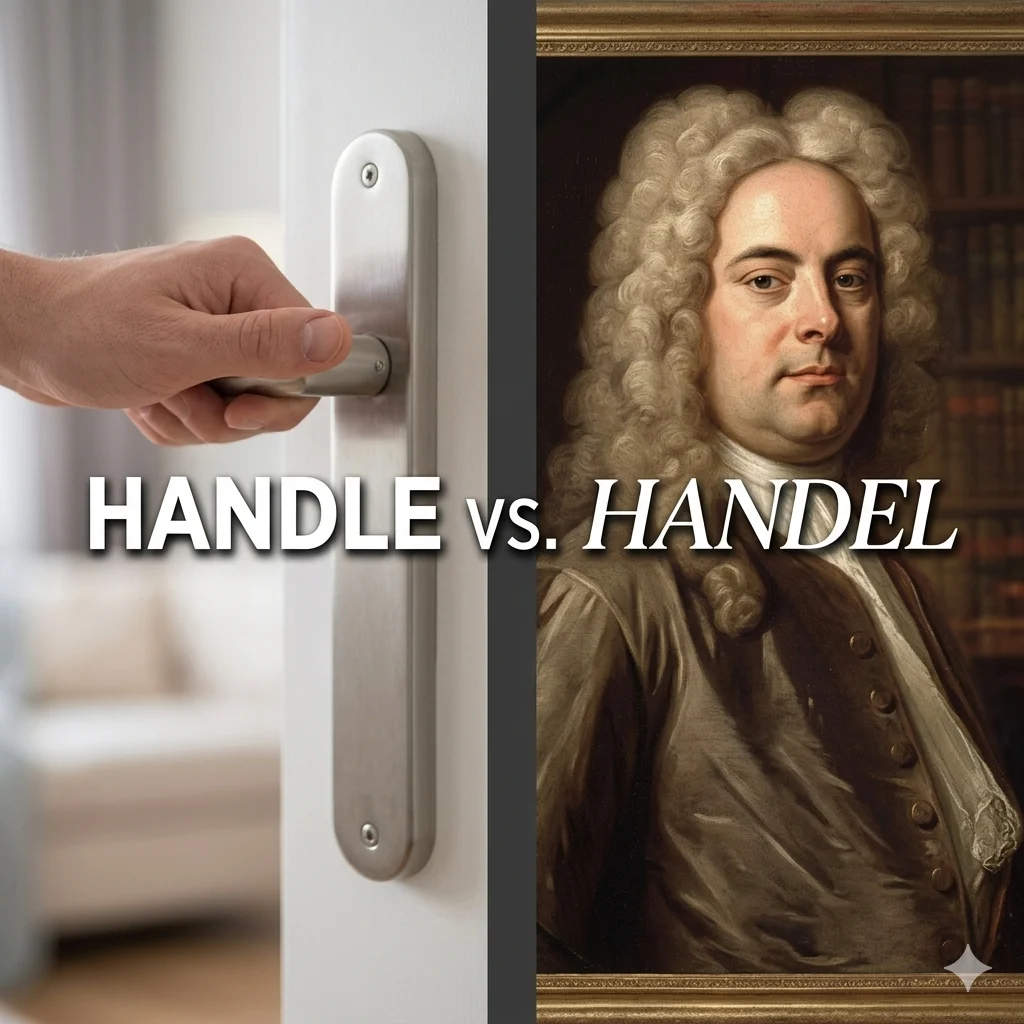
“‘Handle’ means to manage or deal with something, while ‘handel’ is a misspelling or a surname.”
Are you spelling “handle” correctly—or mixing it up with “handel”? Many people confuse these two, but only “handle” is the correct and commonly used English word. It means to manage, deal with, control, or physically hold something, as in “I can handle this task” or “She knows how to handle pressure.
” It is widely used in everyday communication, writing, and professional contexts. On the other hand, “handel” is not a standard English word in modern usage; it is typically a misspelling of “handle” or appears as a proper noun, most notably in the name of the composer George Frideric Handel.
Unlike “handle,” “handel” is not used as a verb or common noun, so it should not be used when referring to managing or dealing with something. Understanding this difference helps you avoid spelling mistakes and ensures your writing remains clear, correct, and professional.
Handle or Handel meanings
Handle is the correct spelling for almost all everyday situations. It is a common English word that can be a verb or a noun. Handel is a proper noun, specifically the surname of a famous composer.
Here is the simple rule:
- Handle (Verb): To manage, touch, or deal with something.
- Example: “Can you handle the pressure?”
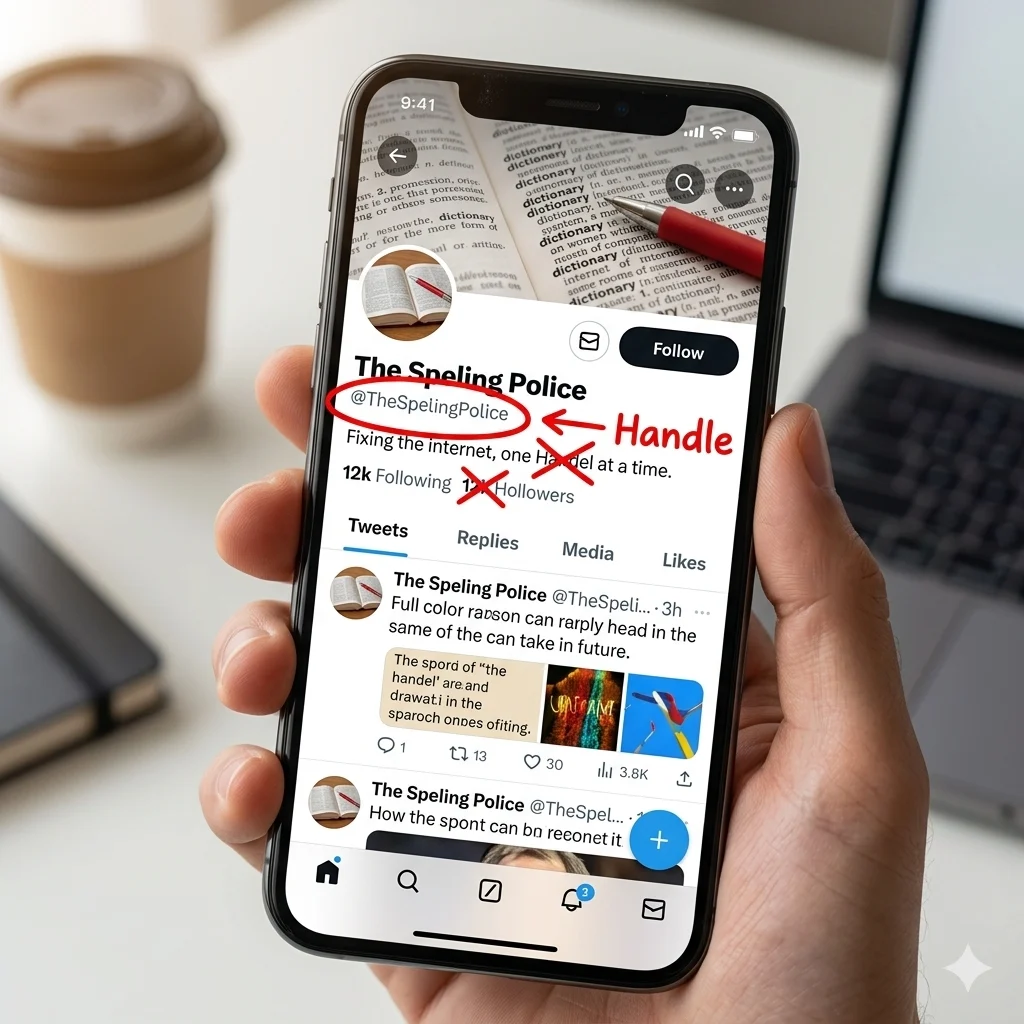
- Handle (Noun): The part of an object you hold, or your username on social media.
- Example: “My Instagram handle is @travelerjohn.”
- Handel (Proper Noun): Refers to George Frideric Handel, the composer who wrote “Messiah.”
- Example: “I love listening to Handel‘s music during the holidays.”
If you are talking about managing a situation, holding a cup, or your online name, the word you want is always HANDLE.
The Origin of Handle
To understand why we have these two spellings, we have to look at their origins. The word handle comes from Old English. It is a combination of the word “hand” (meaning the body part) and the suffix “-le,” which was often used to form nouns. Essentially, a handle has always been something you hold in your hand. By the 14th century, people also began using it as a verb meaning “to touch or move with the hands.”
On the other other hand, Handel is a German surname. The famous composer, George Frideric Handel, was born in Germany (Halle) in 1685. His family name was spelled Händel in German. When he moved to England, he simplified the spelling to Handel to make it easier for the English-speaking public. So, while handle evolved from English words for everyday objects, Handel arrived as a name from Germany. The spelling difference exists purely because one is a functional English word and the other is a famous person’s name

British English vs American English Spelling
This is where many people get tripped up. Since Handel is a German name that was popularized in England, and handle is a standard English word, the spelling rules are actually the same on both sides of the Atlantic. There is no British vs. American difference here.
In both the UK and the US:
- Handle is the correct spelling for the verb and noun.
- Handel is only correct when referring to the composer.
However, because British English retains some French and German influences in spelling, some learners might assume that “Handel” could be a British variant. This is not true. The table below clarifies the usage in different contexts.
Handle vs. Handel in Different Regions
| Context | United States | United Kingdom | Australia/Canada |
|---|---|---|---|
| As a Verb (to manage) | Handle | Handle | Handle |
| As a Noun (door part) | Handle | Handle | Handle |
| As a Social Media Name | Handle | Handle | Handle |
| Referring to the Composer | Handel | Handel | Handel |
| As a Misspelling | ❌ Handell | ❌ Handell | ❌ Handell |
As you can see, there is no gray area. The rules are universal.
Which Spelling Should You Use?
Choosing between handle or handel depends entirely on your audience and what you are trying to say.
- For a US Audience: Always use handle for general topics. Americans are very familiar with the word handle and will immediately recognize Handel as the composer. If you use “handel” to mean “username,” a US reader will likely think you made a typo.
- For a UK / Commonwealth Audience: The advice is exactly the same. Handle is the common word. In fact, because the composer Handel spent so much time in London, British readers might be even quicker to associate the spelling “Handel” with classical music. They will know instantly if you are talking about music or something else based on the spelling.
- For a Global Audience: Stick with Handle. Since Handel is a specific name, using handle for your general meaning is the safest and most correct choice for international communication, whether in business emails or social media bios.
Remember the golden rule: Unless you are writing a biography of a dead German composer, the word you want is HANDLE.
Common Mistakes with Handle
Even native speakers make mistakes with this word. Here are the most frequent errors and how to correct them.
- The “Handel” Typo: This is the most common mistake. People accidentally drop the second ‘d’ or forget the rule.
- Incorrect: “What is your Instagram handel?”
- Correct: “What is your Instagram handle?”
- Confusing it with “Hinder”: Sometimes people mix up the sound.
- Incorrect: “Don’t hinder the situation.” (Hinder means to block or slow down).
- Correct: “Don’t handle the situation like that.” (Handle means to manage).
- Using “Handled” Incorrectly: The past tense of handle is “handled.” People sometimes misspell this as “handeld.”
- Incorrect: “I handeld the problem.”
- Correct: “I handled the problem.”
- Misunderstanding “Handle Someone”: This phrase means to manage or control a person’s behavior.
- Example: “She knows how to handle difficult customers.” It does not mean to physically touch them.
Handle in Everyday Examples
Seeing how the word works in real life helps solidify the difference. Here is how handle is used across different platforms.
- In a Professional Email:
- “I will handle the client meeting tomorrow.”
- “Please ensure you handle this sensitive data with care.”
- On Social Media (Instagram, Twitter, TikTok):
- “My Instagram handle is the same as my name.”
- “Don’t forget to tag my handle in the post!”
- In News Headlines:
- “President struggles to handle the economic crisis.”
- “Police handle the protest peacefully.”
- In Casual Conversation:
- “Wow, that’s a lot of spice! Can you handle it?”
- “The handle on my coffee cup is broken.”
- In Formal Writing (Essays/Reports):
- “The company must handle its logistics more efficiently.”
- “The handle of the antique teapot was made of ivory.”
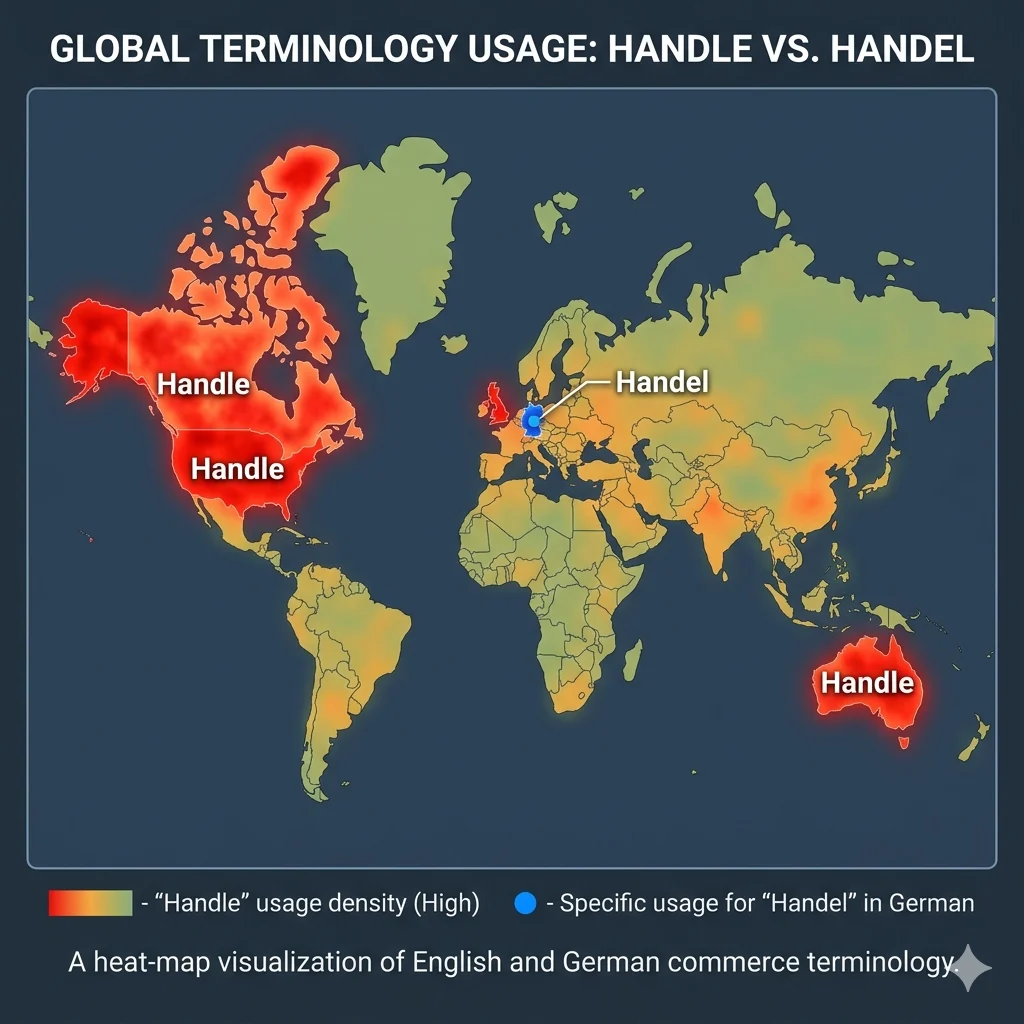
Handle – Google Trends & Usage Data
If you look at search data, the word handle dominates the internet. People are constantly searching for information on how to “handle stress,” what their “handle” should be on a new app, or how to fix a door handle.
Handle as a search term spikes in popularity whenever a new social media platform launches, as users rush to find the perfect username. Conversely, searches for Handel spike around Christmas time because his composition “Messiah” (specifically the “Hallelujah” chorus) is played everywhere.
Popularity by Country:
- United States: High search volume for handle (DIY, social media, business). Handel searches are seasonal.
- United Kingdom: Similar to the US, but with a slightly higher baseline for Handel due to the composer’s historical connection to the country.
- Germany: Here, the composer’s name is spelled Händel, so searches for the English spelling Handel are often related to music or English language learning.
- Australia & Canada: Follows the US/UK trend where handle is the common word.
The data is clear: handle is the workhorse word used in thousands of different contexts every day, while Handel is a niche search related to a specific historical figure.
(FAQs)
Here are the top questions people have about handle or handel.
1. What is the difference between handle and Handel?
Handle is a common English word meaning to manage, deal with, or the part of an object you hold. Handel is the surname of the famous composer, George Frideric Handel.
2. What is the meaning of handle?
As a verb, it means to manage, control, or deal with something (e.g., “I can handle the truth”). As a noun, it means the part of a tool or door you grip, or your username on social media (e.g., “My Twitter handle is @example”).
3. What does it mean to handle someone?
To “handle someone” means to manage or deal with a person, often a difficult one. It implies using skill to control a situation involving that person. For example, “She knows how to handle her boss.”
4. What is the difference between handle and deal with?
They are very similar and often interchangeable. However, deal with often implies you are facing a problem or challenge, while handle can imply you are successfully managing it. “Deal with” can sound slightly more negative (a chore), while “handle” sounds more neutral or capable.
5. Is it Instagram handle or handel?
It is definitely Instagram handle. Your handle is your unique username on the platform. Spelling it as “handel” is a common mistake.
6. How do you use handle in a sentence?
- As a verb: “Please handle the packages with care.”
- As a noun: “Pull the handle to open the door.”
- As a social media term: “Don’t forget to mention my handle in your story.”
7. Is handle a verb, noun, or adjective?
Handle is primarily a verb (“to handle”) and a noun (“a handle”). It can be used as an adjective in compound words like “handlebar” or “handle-less,” but it is not a standalone adjective.
8. What is the Handel meaning in English?
In English, Handel has no meaning other than as a proper noun. It refers specifically to George Frideric Handel, the Baroque composer known for works like “Water Music” and “Messiah.”
Conclusion
In the great debate of handle or handel, the answer is straightforward. Handle is the versatile, everyday word you need for writing about managing tasks, gripping objects, or sharing your social media identity. Handel is a name reserved for one of history’s greatest composers.
We’ve explored the quick answer, the historical origins, and the common mistakes that trip people up. Remember that while spelling rules can sometimes differ between British and American English, this is one case where they are in perfect agreement. The key takeaway is to always consider your context. If you are talking about music history, “Handel” might be correct. For everything else—from dealing with problems to tagging a friend online—the correct spelling is handle.
Mastering these small details polishes your writing and boosts your confidence. So next time you go to type that word, you won’t have to hesitate. You now have the knowledge to choose the right word every single time.

“Machin Smith writes faith-driven reflections for Praydrop, offering readers clarity, hope, and spiritual wisdom for a grounded, meaningful life.”