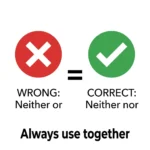
“‘Many’ is the correct English word used with plural countable nouns to express a large number, while ‘meny’ is a misspelling and not used in standard English.”
Are you unsure whether to write “many” or accidentally type “meny”? The correct and standard English word is “many,” which is used to describe a large number or quantity of people, objects, or ideas. The word “meny” is not recognized in standard English and is simply a common spelling mistake.
For example, we say “Many students are studying in the library” or “There are many reasons to learn English,” not “meny.” In grammar, “many” is used with plural countable nouns, helping you express quantity clearly and correctly in both speaking and writing.
Understanding this distinction not only improves your spelling but also strengthens your overall communication skills. In this article, you’ll learn the correct usage of “many,” common mistakes to avoid, and simple examples to help you write with confidence.
Many or Meny meaning
The quick answer is that “many” is the only correct spelling of the word that means a large number of something. “Meny” is a common misspelling and is not recognized as a standard word in English dictionaries.
- Correct: There are many stars in the sky.
- Incorrect: There are meny stars in the sky.
Think of it this way: “Many” is related to quantity (how much), and it rhymes with “penny” or “any.” If you find yourself typing “meny,” your brain is likely spelling it phonetically, but English spelling rules often don’t follow the sound. For a quick check, just remember that the correct word is “many.”
The Origin of “Many”
To understand why we spell “many” the way we do, we have to look at its long history. The word comes from the Old English word “manig” (pronounced mah-nig). This term existed way back before the Norman Conquest in 1066. It was related to the Old Saxon “manag,” the Old High German “manag,” and the Gothic “manags.” All of these words carried the same meaning: a considerable number.
Over centuries, the pronunciation and spelling of “manig” evolved. During the Middle English period (roughly 1100 to 1500), it was spelled in various ways, including “mani,” “manye,” and “meny.” This is a key point in history. Because English was a spoken language before it was a standardized written one, different regions spelled words based on their local accents. In some areas, the vowel sound shifted, leading to the phonetic spelling “meny.” However, as the printing press was invented and dictionaries became standardized, the spelling “many” became the fixed, standard form. The spelling “meny” fell out of use, surviving only as a historical variant or, in modern times, as a common typo.

British English vs American English Spelling
When discussing “many or meny,” it is important to note that this is not a case of American versus British English. Unlike words like “color” (US) and “colour” (UK), “many” is spelled the same way in both major forms of English.
The confusion with “meny” is purely about phonetic spelling versus correct spelling, not a regional dialect difference. Both a writer in London and a writer in New York will use “many.” However, the surrounding grammar can sometimes look different.
| Feature | British English Example | American English Example |
|---|---|---|
| Correct Spelling | There are many people here. | There are many people here. |
| Common Phrase | I haven’t got many sweets left. | I don’t have many candies left. |
| Formal Use | Many of the councillors voted against it. | Many of the council members voted against it. |
| Incorrect Spelling | “Meny” is never correct. | “Meny” is never correct. |
As the table shows, the core word remains the same. The difference lies in the vocabulary surrounding it (like “sweets” vs. “candies”), but the spelling of many is universal.

Which Spelling Should You Use?
The advice here is straightforward. Since English is a global language used for international business, travel, and the internet, consistency is key.
- For a US Audience: Use many.
- For a UK / Australian / Commonwealth Audience: Use many.
- For a Global Audience (Online): Use many.
There is no scenario where “meny” is the appropriate choice. Using “meny” in professional writing, such as emails, reports, or academic papers, will immediately mark the text as containing an error. For students, understanding the many or meny grammar rule is essential for passing exams. Always default to “many” when you are referring to a large quantity.
Common Mistakes with “Many”
Besides the primary confusion of “many or meny,” there are other frequent errors people make when using this word.
- Using “Many” with Uncountable Nouns: This is a classic grammar mistake. “Many” is used for countable nouns (things you can put a number on). For uncountable nouns (things you measure), use “much.”
- Correct: How many bottles of water? (Bottles are countable).
- Incorrect: How many water? (Water is uncountable).
- Correct: How much water?
- Confusing “Many” with “A Lot Of”: While they are synonyms, “many” often sounds more formal in certain contexts.
- Informal: I have a lot of friends.
- Formal: I have many friends.
- The “Meany” Trap: Sometimes people misspell “many” as “meny,” but they might also confuse it with the word “meany.” What is a meany? A “meany” (sometimes spelled “meanie”) is an informal noun for a person who is unkind or unpleasant. It has a completely different meaning from “many.”
- Example: Don’t be such a meany! (Person)
- Example: I have many reasons to be happy. (Quantity)
“Many” in Everyday Examples
Seeing the word used in different contexts helps solidify the correct spelling. Here is how “many” appears in daily life:
- In Emails (Professional): “Thank you for your patience. We have received many applications for the position and will be in touch soon.”
- In News Headlines (Formal): “How Many Jobs Were Added to the Economy Last Month?” or “Too Many Cooks in the Kitchen? City Council Debates New Law.”
- On Social Media (Informal): “So many great food pics from the weekend! Can’t wait for the next trip.” or “Not many people know this secret spot in the park.”
- In Questions (Everyday Speech): “How many times do I have to tell you to close the door?”
In every single one of these examples, if you replaced “many” with “meny,” it would look unprofessional and incorrect. The spelling remains constant.

“Many” – Google Trends & Usage Data
Analyzing search data for the query “many or meny” reveals interesting user behavior. Typically, this keyword is searched by:
- Young Students: Children learning to read and write often sound out words, leading them to search for the phonetic “meny.”
- English as a Second Language (ESL) Learners: Adults learning English may struggle with the irregular spelling of common words.
- Native Speakers with Dyslexia or Learning Differences: Visual perception of the word can sometimes be tricky.
Geographically, searches for “meny” tend to be slightly higher in regions with high non-native English speaker populations, as well as in areas where strong regional accents make the vowel sound in “many” less clear. However, globally, the search volume is a clear indicator that users want a definitive answer to the spelling dilemma. They are looking for a quick answer, and data shows they prefer concise, direct results that tell them the correct spelling immediately.
(FAQs)
Here are some of the most common questions people have regarding “many or meny.”
1. Is it many or meny?
The correct spelling is many. “Meny” is a common misspelling and is not found in standard English dictionaries.
2. When to use many?
Use “many” when you are talking about a large number of people or things that can be counted. For example, “How many cars are in the parking lot?” or “There are many options to choose from.”
3. What is the meaning of meny?
“Meny” has no standard meaning in modern English. It is simply an incorrect spelling of the word “many.” In very rare, historical contexts, it was a variant spelling, but it is obsolete today.
4. What is a meany?
A “meany” (or “meanie”) is an informal, slightly childish word for a person who is cruel, unkind, or not generous. For example, “My brother is such a meany for not sharing his ice cream.”
5. Many or meny meaning?
The meaning of the phrase “many or meny” is a search query to determine the correct spelling. The intended meaning is always “many,” referring to a large quantity.
6. Many or meny in a sentence?
- Correct Sentence (Many): “How many apples did you buy?”
- Incorrect Sentence (Meny): “How meny apples did you buy?”
7. Is there a worksheet to practice many or meny?
While “meny” isn’t a correct word to practice, teachers often create worksheets to practice using “many” vs. “much.” These worksheets help students understand the difference between countable and uncountable nouns.
8. What is a synonym for many?
Common synonyms for “many” include: numerous, countless, several, various, multiple, and abundant. For example, “He has numerous talents.”
Conclusion
Mastering the basics of spelling is the foundation of strong communication. The confusion between “many or meny” is a perfect example of how the sounds of spoken English don’t always match the rules of written English. To summarize, “many” is the only correct spelling for the word indicating a large number. “Meny” is simply a phonetic error with no place in formal or informal writing.
We explored the history of the word from Old English “manig,” confirmed that its spelling is consistent across both British and American English, and clarified the difference between “many” (quantity) and “meany” (an unkind person). Whether you are writing a school essay, a professional email, or a quick text to a friend, using the correct spelling establishes your credibility. Remember the simple trick: think of the word “penny” to remind you of the “any” sound at the end of “many.” By following these guidelines, you can confidently use the word “many” and know exactly why “meny” is always a mistake to avoid.

“Rose Macaulay shares thoughtful, faith-inspired reflections on Praydrop, guiding readers with wisdom, hope, and spiritual insight for everyday life.”